Packing isn’t just about fitting things into a suitcase—it’s about setting yourself up for a smoother, more confident trip. When your bag is thoughtfully packed, you move faster through airports, stress less in transit, and spend more energy on enjoying the destination instead of digging for that one missing item. This guide focuses on five practical, real-world packing moves that can turn any suitcase into a travel MVP, whether you’re heading out for a weekend city break or a multi-week adventure.
Tip 1: Build a “Travel Uniform” Instead of Random Outfits
Instead of planning outfits one by one, think in terms of a mini wardrobe where everything works together. Choose a simple color palette (for example: black, white, and one accent color), and stick to it so tops, bottoms, and layers can be mixed and matched without effort. Prioritize pieces that do double duty: a black dress that can be casual with sneakers or elevated with flats, or chinos that work for both daytime exploring and dinner.
Look for wrinkle-resistant fabrics—blends that include polyester, nylon, or merino wool tend to pack and unpack well. If something only works in one specific situation, question whether it deserves a place in your bag. By the time you’re done, you want to be able to create multiple outfits from fewer pieces, so you can pack lighter but dress smarter. This approach is especially useful for carry-on-only travel, where every item really has to earn its spot.
Tip 2: Use “Zones” Inside Your Bag for Easy Access
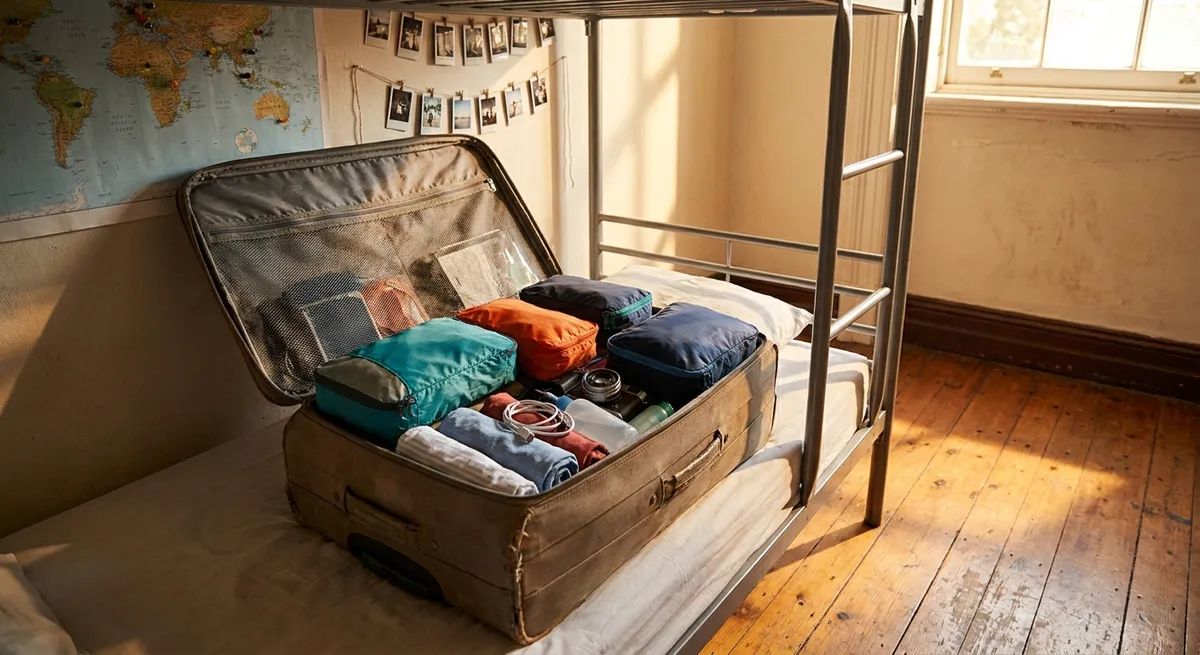
Think of your suitcase or backpack as a small studio apartment: everything needs a clear home. Instead of tossing items in wherever there’s space, assign “zones” and stick to them. For example, one packing cube or section for tops, one for bottoms, one for undergarments, and one for “daily essentials” (pajamas, tomorrow’s outfit, and toiletries). This way, you can open your bag and grab what you need without disrupting the entire setup.
Use small pouches for categories that easily get messy—like cables, meds, or cosmetics. Keep heavy items closer to the wheels or the bottom of your backpack for better weight distribution and easier rolling or carrying. Reserve a quick-access area (external pocket or top of your bag) for what you’ll need during travel: travel documents, a light jacket, headphones, snacks, and a pen. When everything has a zone, packing and repacking become almost automatic, saving you time and stress at every stop.
Tip 3: Create a Permanent “Grab-and-Go” Travel Kit
Instead of rebuilding your packing list from scratch before every trip, maintain a dedicated travel kit that stays ready to go. Use a small toiletry bag that always contains essentials in travel-size containers: toothbrush, toothpaste, deodorant, basic skincare, small comb or brush, and a tiny first-aid/meds pouch (pain reliever, bandages, motion sickness tablets, any personal prescriptions with labels). Refill or replace items as soon as you return home, so it’s always ready for the next departure.
Apply the same idea to a simple “tech and comfort” kit: a compact charger, universal adapter if you travel internationally, a short charging cable, wired backup earbuds, and an eye mask or earplugs. Keep these kits stored together in a drawer or bin labeled “Travel.” When it’s time to pack, you drop them into your bag in seconds, knowing you haven’t forgotten your daily essentials. This small habit removes a huge amount of pre-trip mental load and helps you avoid last-minute drugstore runs.
Tip 4: Protect Your Gear with Lightweight Layers, Not Bulk
You don’t need bubble wrap to keep your stuff safe—smart layering goes a long way. Place shoes along the edges of your suitcase in shoe bags (or even shower caps) to protect clothes, and stuff socks or smaller items inside to maintain shape and save space. Use softer clothing—like sweaters, hoodies, or scarves—to cushion fragile items such as small souvenirs, sunglasses case, or electronics accessories inside your bag.
If you’re traveling with a laptop or tablet, always place it in a padded sleeve and store it flat against a firm surface of your carry-on (like the back panel), not in a front pocket where it can bend under pressure. Keep liquids in a clear, sealable pouch and store them near the top of your bag to reduce damage if something leaks; consider putting that pouch into an additional lightweight zip bag for extra protection. By turning clothing into padding, you both protect your gear and avoid wasted space from dedicated bulky cases.
Tip 5: Plan for “Day One” and “Just in Case” Without Overpacking
The first few hours after you land or arrive somewhere can feel chaotic if you can’t access what you need quickly. Pack a small “Day One” bundle: sleepwear, a fresh change of clothes, basic toiletries, and any must-have items like contact lenses or medications. Keep this near the top of your suitcase or in your personal item, so if your room isn’t ready or your checked bag is delayed, you still feel comfortable and in control.
For the inevitable “what ifs,” set a strict limit. Decide on one small pouch or a single packing cube for “just in case” items, and make everything in it genuinely useful: a compact reusable bag, a lightweight packable jacket, a few extra meds, a backup pair of socks, and maybe a small stain-removal wipe or mini sewing kit. Once that pouch is full, that’s your cap—no more emergency items. This protects you from overpacking out of anxiety while still giving you a logical, contained backup plan that makes you feel prepared.
Conclusion
Smart packing doesn’t require special gear or complicated strategies—it’s about making a few intentional choices that pay off at every step of your journey. By building a mix-and-match travel uniform, organizing your bag into zones, keeping a ready-to-go travel kit, using your clothes as protection, and planning thoughtfully for day one and emergencies, you set yourself up for smoother, more confident travel. The more you refine your own packing system, the less time you’ll spend wrestling with your suitcase and the more energy you can pour into exploring, relaxing, and enjoying the trip you worked so hard to plan.
Sources
- U.S. Department of State – Travel Preparation Tips - Official checklist for documents, meds, and safety considerations before international trips
- Transportation Security Administration (TSA) – What Can I Bring? - Up-to-date rules on liquids, electronics, and items allowed in carry-on vs. checked luggage
- Centers for Disease Control and Prevention – Traveler’s Health - Guidance on travel health kits, medications, and destination-specific health advice
- Mayo Clinic – Travel and Packing for Health - Recommendations for medications, first-aid items, and staying healthy on the road
- REI Co-op Expert Advice – How to Pack a Suitcase - Practical strategies for organizing bags, using packing cubes, and choosing travel clothing
Key Takeaway
The most important thing to remember from this article is that this information can change how you think about Packing Tips.