Packing isn’t just about what goes into your bag—it’s about how easily you can live out of that bag once you’re on the move. Whether you’re sprinting between gates, hopping trains, or road‑tripping across a new country, the way you pack can make every transition smoother, calmer, and way more enjoyable. This guide focuses on practical, real‑world tips that help you stay organized and ready for anything while you’re in transit—not just when you finally reach the hotel.
Build a “Transit-Ready” Layer System
Instead of thinking in outfits, think in layers you can adapt on the fly. Plan a base layer (like a breathable T‑shirt), a mid-layer (light sweater or fleece), and an outer layer (packable jacket or shell). Wear your bulkiest items on travel days to save space in your bag and to give yourself flexibility if temperatures shift suddenly in airports, trains, or buses.
Choose fabrics that dry quickly and resist odors—merino wool or good synthetics are ideal—so you can re‑wear layers without feeling grimy. Keep a compact scarf or wrap handy: it can double as a blanket on a chilly flight, a pillow, or a cover‑up if you need to adjust to local customs. Packing with layers in mind means you can adapt to over‑air‑conditioned planes, hot terminals, or cool evenings without digging through your bag every time.
Create a Grab-and-Go Essentials Kit
Pack a small, easy‑to‑access pouch that never leaves your side on travel days. This should hold items you’ll actually reach for in transit: passport, boarding passes or tickets, a pen for forms, lip balm, hand sanitizer, headphones, a charging cable, and any medications you might need during a long leg of the journey. Think of it as your “mobile cockpit” for travel.
Keep this kit in the same spot every time—either a specific pocket in your backpack or a dedicated sling bag. That way, security checks are faster, you’re not digging around at the gate, and you’re less likely to misplace important documents. If you’re flying, include a small resealable bag with travel‑size toiletries allowed in your carry‑on (like face wipes and a toothbrush) so you can freshen up mid‑journey without unpacking your whole bag.
Pack a “First 24 Hours” Mini Capsule
Assume your checked bag might be delayed and pack your carry‑on so you could comfortably survive the first 24 hours at your destination. That means a change of underwear, fresh socks, a basic T‑shirt or top, minimal toiletries (toothbrush, small toothpaste, deodorant, face wash), and any crucial items like prescription meds or contact lenses.
Keep these items grouped together in a small packing cube or fabric pouch clearly distinct from your in‑transit essentials. When you arrive, you can immediately freshen up and change without exploding your entire suitcase in the hotel lobby or airport bathroom. This “first 24 hours” capsule also helps if your room isn’t ready yet—you’ll have what you need to feel human and ready to explore, even while waiting for check‑in.
Design a Flexible Tech Setup
Tech clutter can derail a smooth travel day faster than almost anything. Instead of packing every gadget you own, start with your actual needs: what will you genuinely use while moving between places? Typically that’s a phone, maybe a tablet or laptop, headphones, and a universal adapter if you’re crossing borders.
Use a compact tech organizer to store all your cables, a small power bank, and a multi‑port USB charger so you’re not fighting for outlets in airports or cafés. Pick shorter cables for everyday use and one longer cable for awkward outlets in airports or hotels. Before you go, download offline maps, boarding passes, key translation phrases, and entertainment to reduce your reliance on spotty Wi‑Fi. A streamlined, intentional tech kit means fewer tangles, less stress at security, and no more rummaging for a charger at 3% battery.
Structure Your Bag for “Travel Day Mode”
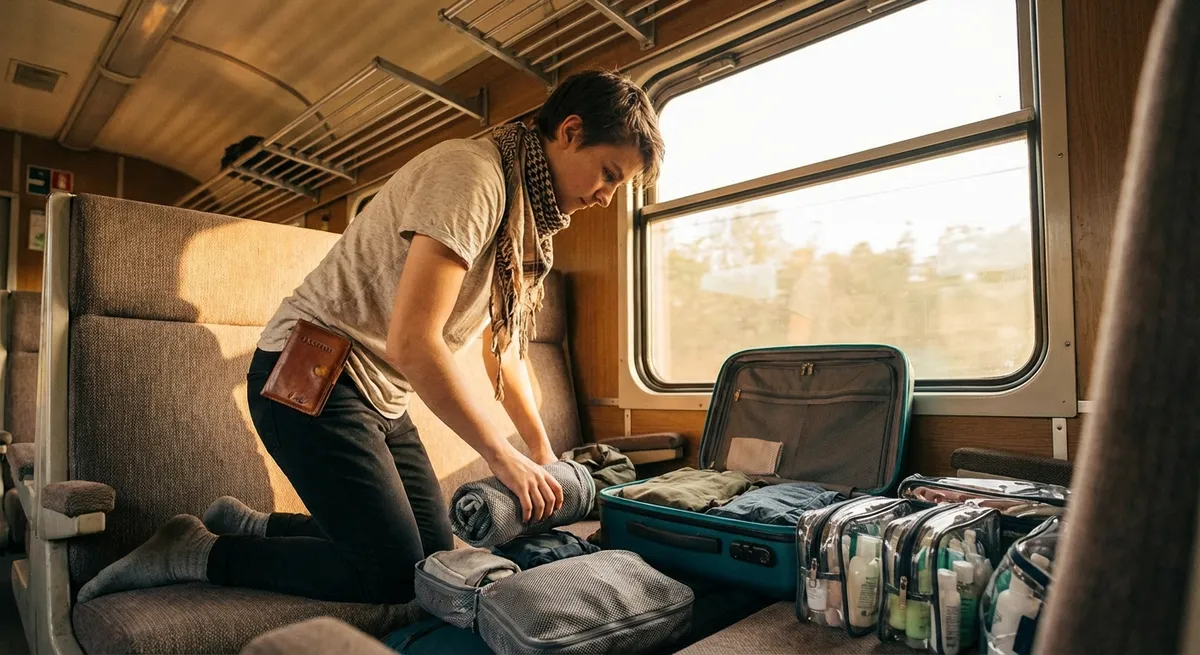
The most useful packing trick for transit days is organizing your bag by how you use things, not just by category. Imagine your bag in “layers”: what you’ll need repeatedly during the day should be closest to the top or in external pockets, while true “destination-only” items can live deeper inside.
Place your transit essentials kit, a light layer, a refillable water bottle (empty for security), and snacks in easy-reach zones. Put heavier items like shoes closer to your back in a backpack or centered in a suitcase to make carrying and rolling more comfortable. Use packing cubes not just to save space but to “file” your clothes vertically in a suitcase so you can grab a single item without digging through your entire wardrobe. When everything has a logical, consistent home, every bus change, gate sprint, or train hop becomes far less chaotic.
Conclusion
Packing with transit in mind transforms travel days from something you endure into a part of the trip you can actually enjoy. By layering smart, keeping your essentials tight and accessible, planning a “first 24 hours” capsule, taming your tech, and structuring your bag for movement, you set yourself up for smoother connections and calmer moments on the go. Small tweaks in how you pack ripple through the whole journey—so the next time you zip up your bag, pack for the way you travel, not just where you’re going.
Sources
- U.S. Transportation Security Administration (TSA) – What Can I Bring? - Clear guidelines on what’s allowed in carry‑on and checked bags, helpful for planning your essentials kit.
- Centers for Disease Control and Prevention (CDC) – Travelers’ Health - Recommendations for building a basic travel health kit, including medications and hygiene items.
- Mayo Clinic – Travel and Health: Packing Checklist - Medical and comfort items to consider for safe and comfortable trips.
- BBC Travel – How to Pack Like a Pro - Practical insights and strategies from frequent travelers and experts.
- REI Co-op Expert Advice – How to Choose Travel Clothing - Guidance on fabrics and layering systems that work well for different climates and active travel days.
Key Takeaway
The most important thing to remember from this article is that this information can change how you think about Packing Tips.