Packing doesn’t have to be a frantic, night-before scramble. With a simple ritual and a few smart habits, you can turn packing into something that feels almost automatic—no more “Did I forget my charger?” panic at the airport. This guide walks you through a repeatable system plus five practical, traveler-tested tips that make every suitcase easier to manage, lighter to carry, and faster to unpack.
Start with a “Base Kit” You Never Unpack
Instead of rebuilding your packing list from zero every time, create a permanent travel base kit that lives in your suitcase or carry-on.
Fill a small pouch or dopp kit with full-time travel duplicates: toothbrush, toothpaste, razor, deodorant, medication organizer, travel-sized toiletries, extra phone cable, plug adapter, and a compact power strip. Label the kit and treat it like travel-only gear—no borrowing items for home use.
This one-time setup transforms packing from “gather everything” to “top up what’s low.” Before each trip, all you do is refill liquids, swap any destination-specific items (e.g., sunscreen for a beach trip, bug spray for a hiking getaway), and you’re done. Keeping your kit permanently packed drastically cuts prep time and lowers the odds of forgetting a daily essential.
Over time, you can fine-tune your kit based on real experience: maybe you add a tiny lint roller, a stain-removal pen, or a collapsible water bottle if you regularly miss those on the road. Think of it as your personal “travel operating system” that gets smarter with each trip.
Use the “Outfit Grid” Method to Avoid Overpacking
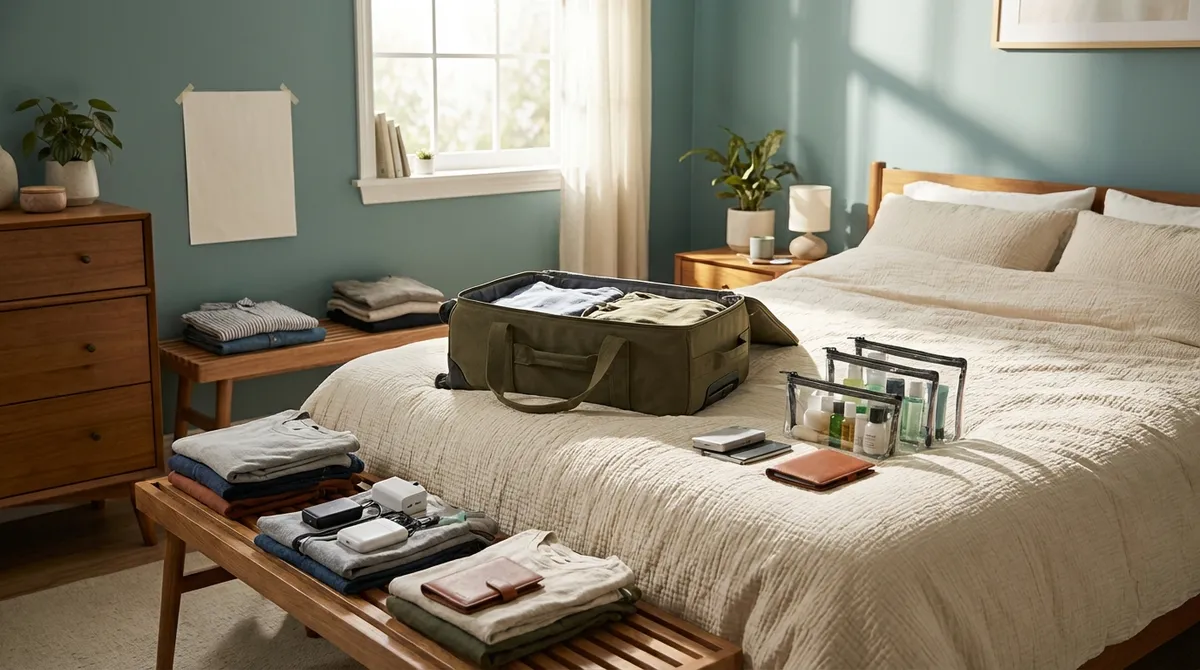
Randomly tossing clothes in a bag is the fastest way to overpack—and still end up with nothing that works together. The outfit grid method turns your bed (or floor) into your staging area so you see everything at once before a single item hits the suitcase.
Lay out every outfit you think you’ll need in full: top, bottom, underwear, socks, and any layer you’ll realistically wear with it (cardigan, light jacket, scarf). Do this day by day for your entire trip so you can visually count what you’re bringing.
Once you see your wardrobe in one view, start editing. Remove duplicate items, like extra jeans or nearly identical tops. Aim for pieces that work in multiple outfits—neutrals, items that layer easily, and styles that can be dressed up or down. If something doesn’t pair with at least two other items, reconsider it.
This method makes it obvious when you’re packing three “just in case” outfits you’ll never wear. It also helps you spot gaps early (like realizing you packed daytime walking clothes but no nicer option for dinner). Photograph your final outfit grid on your phone—this doubles as a quick reference while traveling and a checklist when you repack to come home.
Turn Your Personal Item into a “Mobile Command Center”
Your personal item (backpack, tote, or under-seat bag) is prime real estate—it holds what you actually need in reach during transit and your first few hours at the destination. Think of it as your mobile command center rather than a random catch-all.
Start by dividing it into zones using small pouches or zip-top bags: one for tech (chargers, headphones, power bank, adapters), one for health and comfort (meds, hand sanitizer, lip balm, eye mask, earplugs, tissues), and one for essentials (wallet, passport, printed confirmations, pen, and a small notebook or folded sheet with key numbers and addresses).
Always include a minimalist “arrival kit”: travel-sized toothbrush and toothpaste, facial wipes, a small moisturizer, and one fresh pair of underwear and socks. If your checked bag is delayed, you’ll still feel human when you land. Add a light, packable layer (like a thin hoodie or scarf) that works on chilly planes and cooler evenings.
Before you leave home, pack this bag as if your suitcase might get lost and you have to survive 24 hours with only what’s under the seat in front of you. That mindset leads you to prioritize smartly and prevents important items from getting buried in the main luggage you can’t access in transit.
Create a Flat “Essential Documents” Layer
Digging for documents at the check-in desk or security line is stressful and slows everything down. A simple packing strategy can make your most important papers and IDs always accessible without adding bulk.
Use a slim, flat document organizer or even a sturdy folder that fits in the laptop sleeve or flat compartment of your bag. In it, keep your passport (if needed), a printed copy of your itinerary, hotel bookings, travel insurance details, emergency contacts, and any required visas, entry forms, or vaccination documentation.
Digitize everything as a backup: save PDFs in a cloud storage app, email key docs to yourself, and store critical information (like card cancellation numbers and embassy contacts) in an offline-capable notes app. Still, don’t skip the physical copies—paper doesn’t depend on battery life or data coverage, which can be a lifesaver in transit or during unexpected disruptions.
When you pack, slot this document layer in last so it stays against the outermost, easy-access area of your bag. That way, you can reach for it like a book on a shelf rather than digging through clothes. Maintaining the same spot for documents on every trip turns finding them into muscle memory, cutting down on fumbling at the worst moments.
Design an “Arrival First Hour” Bundle
Most packing checklists focus on what you need for the whole trip—but your stress level is shaped by the first hour after you arrive. Designing a small “arrival first hour” bundle makes that transition smoother, whether you’re landing at midnight, stepping into humidity, or trying to navigate a new city after a long journey.
Choose one pouch or packing cube where you keep everything you’ll want immediately upon arrival: local currency (or a small stash of universally useful cash like USD or EUR), a local SIM card or eSIM instructions, printed directions to your accommodations, public transit or rideshare details, and a simple city map or screenshot of key locations.
Add a tiny comfort kit: a snack you know sits well with you (granola bar, nuts), basic pain reliever, and any personal must-haves like allergy pills or motion sickness tablets. If you’ll arrive late, toss in a minimal sleep setup—earplugs, an eye mask, and a tiny, foldable toothbrush.
Place this bundle near the top of your main bag or in your personal item so it’s the first thing you pull out at the destination. When you walk out of the airport or station, you’re not scrambling through luggage—you’ve already got everything you need in one grab-and-go spot. That small layer of planning can completely change how your trip starts.
Conclusion
Packing well isn’t about being perfect—it’s about building a ritual that reduces decisions, cuts chaos, and lets you focus on the fun parts of travel. A permanent base kit, visual outfit planning, a smart personal item setup, flat document layer, and an “arrival first hour” bundle work together as a simple system you can reuse on every trip.
Once you’ve tried this approach a couple of times, it starts to feel automatic. You’ll spend less time worrying about what you forgot and more time actually enjoying the journey. Tweak these ideas to fit your style, save your own checklists, and let your packing process evolve with every adventure—your future self at the departure gate will thank you.
Sources
- U.S. Department of State – Travel Preparation Guide - Official advice on documents, safety, and preparation before international trips
- Transportation Security Administration (TSA) – What Can I Bring? - Detailed rules on what’s allowed in carry-on and checked luggage, including liquids and medications
- Centers for Disease Control and Prevention (CDC) – Traveler’s Health - Guidance on health-related packing, medications, and destination-specific considerations
- Mayo Clinic – Travel Health Tips - Practical information on staying healthy during travel and what to pack for common issues
- International Air Transport Association (IATA) – Passenger Travel Center - Information on airline travel requirements, documents, and baggage considerations
Key Takeaway
The most important thing to remember from this article is that this information can change how you think about Packing Tips.