Packing shouldn’t feel like a game of suitcase Tetris you always lose. With a few smart habits, you can turn that pre-trip chaos into a quick, almost automatic routine—whether it’s a weekend city break or a three‑week adventure abroad. This guide walks you through practical, real-life packing moves that help you stay organized, avoid overpacking, and actually enjoy your trip without worrying what you left behind.
Start With Your Days, Not Your Closet
Before you even touch your suitcase, plan your packing around your itinerary, not your wardrobe.
Think through each day of your trip: what you’ll do, where you’ll be, and how you’ll get there. Are you walking a lot? Eating at dressy restaurants? Jumping between climates? Jot down a quick “trip schedule” and match outfits to activities, instead of just piling in favorites.
Building outfits by day instantly reveals what you don’t need. If you can’t name where you’ll wear it, it stays home. Focus on clothes that can handle multiple roles: a casual dress that works for sightseeing and dinner, or clean sneakers that look good with jeans and are comfortable for long walks.
Bonus move: snap photos of your planned outfits on your phone. When you’re groggy or jet-lagged, you won’t stare at your suitcase wondering what to wear—you’ll scroll, pick, and go.
Lock In a Color Palette That Does the Work for You
Packing gets dramatically easier when everything works together. That’s where a simple color palette comes in.
Choose 1–2 main neutral colors (like black, navy, or beige) plus 1–2 accent colors you love. Every clothing item should play nicely within that palette. This turns your suitcase into a mini capsule wardrobe where tops, bottoms, and layers can mix and match in multiple ways.
Instead of packing three different outfits for three days, you might bring:
- Two tops
- Two bottoms
- One light layer
But those can combine into four or more looks. That means fewer items, more options, and less “I have nothing to wear” drama.
This strategy also helps with shoes—the bulkiest, hardest-to-pack items. If you stick to a tight palette, you usually only need:
- One comfortable walking pair (wear these in transit)
- One compact dressier pair (pack these)
You’ll save space, cut weight, and still feel put-together in trip photos.
Think in Layers, Not “Just in Case” Items
The phrase “just in case” is responsible for countless overweight suitcases. A smarter approach is to pack layers that adapt to changing weather and situations.
Instead of extra heavy items (like a thick sweater and a jacket), aim for a layering system:
- A breathable base (t-shirts, light long sleeves)
- A mid-layer (light sweater, fleece, or cardigan)
- A top layer (packable jacket or rain shell)
Layers trap heat better than one big bulky piece, and they’re easier to add or remove as temperatures shift between planes, trains, museums, and evenings out.
Apply this to other items too:
- Accessories: A scarf can double as a blanket on flights, a cover-up at religious sites, and a layer of warmth on chilly nights.
- Workout gear: One set of moisture-wicking clothes can be used for exercise, hiking, or as comfy sleepwear.
- Sleep vs. lounge: Choose items that can do double duty, like relaxed joggers that work both on flights and as pajamas.
If something only has a single, very specific use, question whether it deserves a spot in your bag.
Turn Your Personal Item Into a Travel Command Center
Your “personal item” (backpack, tote, or under-seat bag) is prime real estate. Treat it like your in-transit survival kit and daily grab-and-go bag, not an afterthought.
Pack it with anything you’d be stressed to lose or need quick access to:
- Passport, ID, and travel documents
- Wallet, cards, and some local currency
- Phone, chargers, and a small power bank
- Medications and basic first-aid items
- A pen (border forms, anyone?)
- Headphones and one small comfort item (neck pillow, eye mask, or light scarf)
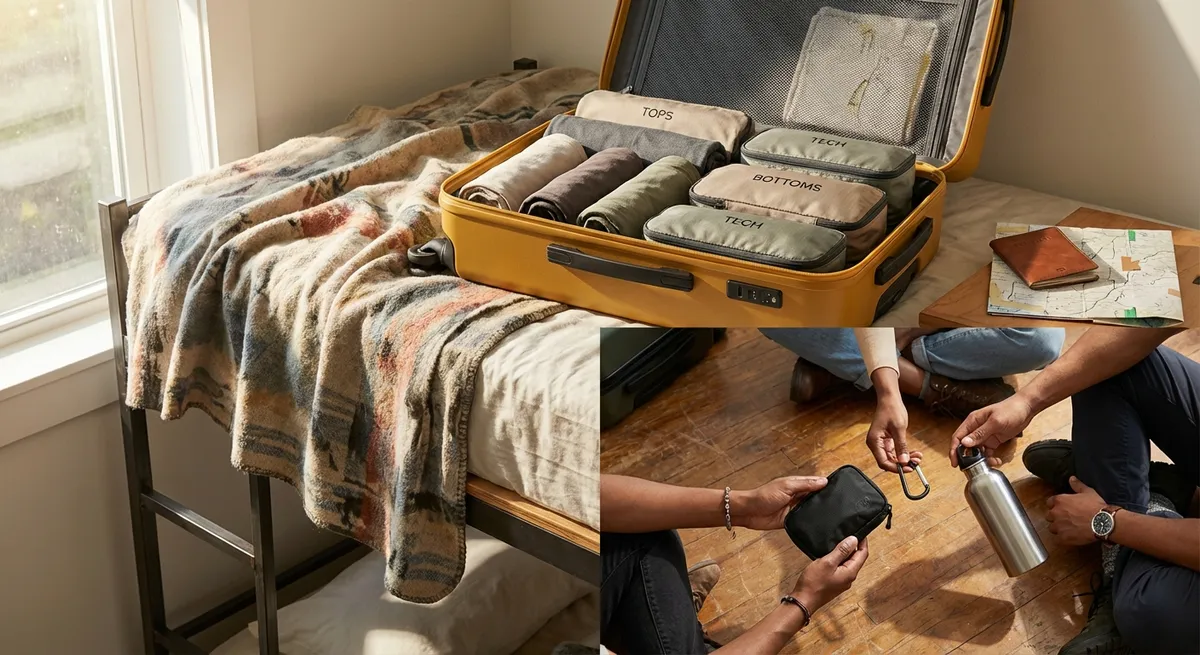
Use small pouches to separate categories: tech, health, snacks, and essentials. That way you’re not digging through a black hole bag at security or on the plane.
Once at your destination, this bag becomes your daypack. Keep a mini version of your setup inside: reusable water bottle, tissues, hand sanitizer, a small packable tote, and a snack. With everything in its place, you’re out the door faster and less likely to forget something important when you head out exploring.
Pack a “First Night” Kit You Can Grab in Seconds
Long travel days and time zone shifts can leave you too tired to fully unpack—but you’ll still want to feel human when you arrive. A simple “first night” kit solves that.
Pack a small, easy-to-access pouch with:
- Travel-size toothbrush and toothpaste
- Face wipes or a tiny cleanser
- Basic skincare or moisturizer
- Travel-size deodorant
- Any must-take nighttime medications
- One pair of clean underwear and socks
Place this kit at the top of your suitcase or in your personal item. When you land late or your room isn’t quite ready, you can freshen up in minutes without tearing your bag apart.
This is especially helpful if your checked bag is delayed. Combine your first-night kit with a backup outfit in your carry-on, and you’ll still be able to manage comfortably for at least 24 hours.
Conclusion
Packing well isn’t about being a minimalist or owning fancy gear. It’s about making your bag work for you: outfits planned around your days, a tight color palette, smart layering, a dialed-in personal item, and a first-night kit that keeps you sane when you arrive.
Use these tips as a base, then tweak them to fit your travel style. After a trip or two, you’ll refine your own “default packing setup”—and suddenly, getting ready to go somewhere won’t feel like a chore. It’ll feel like the first step of the adventure.
Sources
- U.S. Department of State – Travel Checklist - Official pre-trip guidance, including documents and essentials to keep with you
- Transportation Security Administration (TSA) – What Can I Bring? - Up-to-date rules on what you can pack in carry-on vs. checked luggage
- Mayo Clinic – Jet Lag Disorder - Helpful for planning in-flight comfort items and first-night essentials
- REI Co-op – How to Pack a Suitcase - Practical advice on layering, clothing choices, and space-saving techniques
- University of Michigan – Travel Health Tips - Guidance on medications and personal health items to keep accessible while traveling
Key Takeaway
The most important thing to remember from this article is that this information can change how you think about Packing Tips.