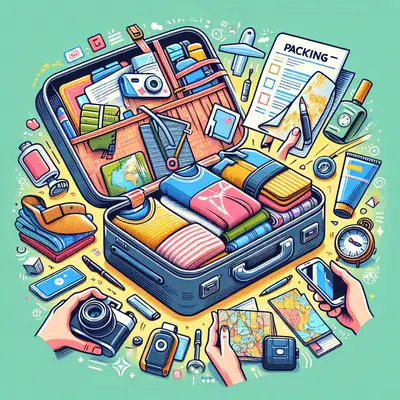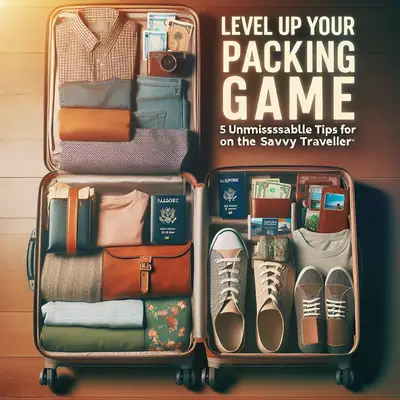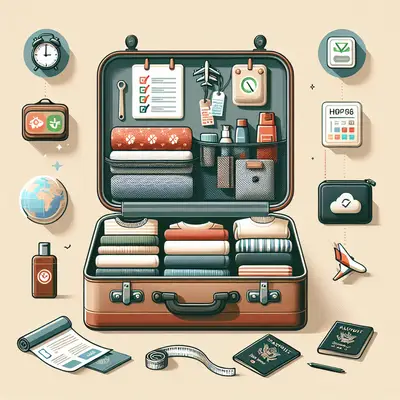
Packing doesn’t have to be stressful or chaotic. With a few smart, easy-to-use strategies, your suitcase can feel bigger, your bag lighter, and your trip smoother from day one. These five practical tips are designed for real travelers—people who juggle limited space, changing weather, and airlines that love baggage rules a little too much.
Whether you’re heading out for a quick weekend escape or a long-haul adventure, these ideas will help you pack with confidence and actually enjoy the process.
Build a “Core Outfit System” Instead of Random Pieces
Most overpacking happens before you even touch your suitcase: it starts in your closet. Instead of pulling out anything you “might” wear, build a simple outfit system around a few core pieces.
Choose 2–3 bottoms in neutral colors (black, navy, tan, or denim) and 3–5 tops that can mix and match with all of them. Add one layer (like a lightweight sweater or jacket) that works with every outfit. Aim for clothes that can be dressed up or down—like dark jeans that work with sneakers during the day and nicer shoes at night.
Stick mostly to one color palette so everything matches without thinking. This gives you more outfit combinations with fewer things. When in doubt, lay your clothes out on your bed and physically mix and match them. If an item doesn’t work in at least two outfits, it’s not coming.
This “core system” approach reduces decision fatigue on the road. You’ll reach into your bag, grab almost anything, and know it works together. That’s the secret to traveling light without feeling like you’re wearing the same thing every day.
Use Smart Space Savers (Without Wrinkling Everything)
You don’t need fancy gadgets to fit more into your bag—just a bit of structure and technique.
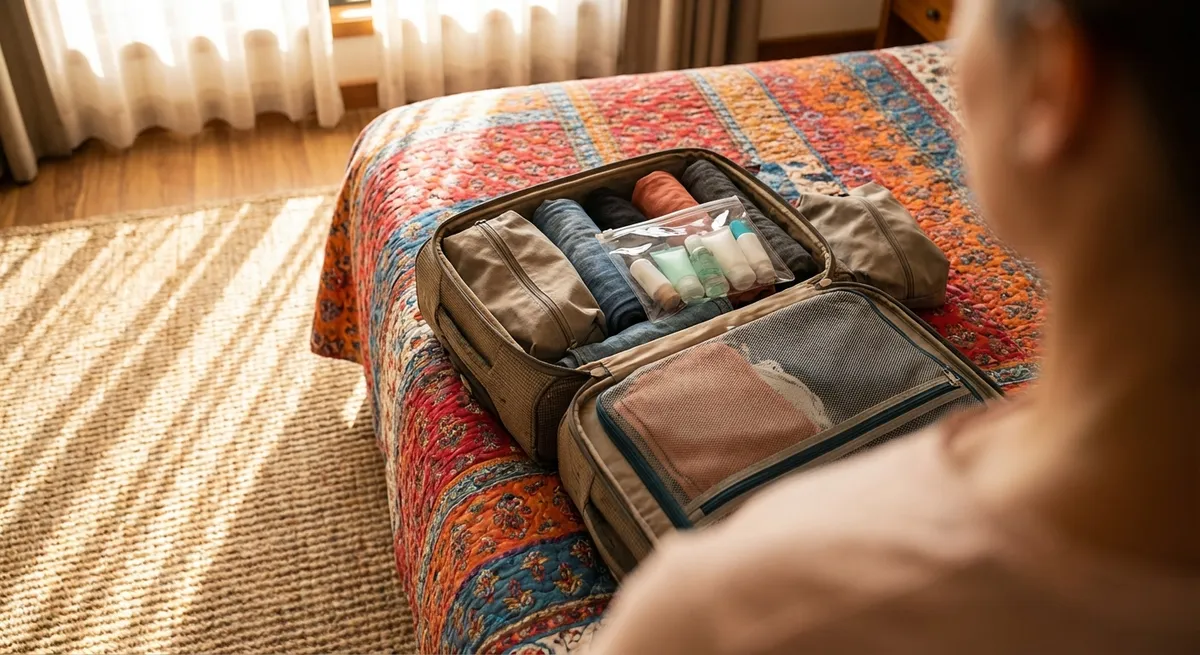
Packing cubes are the easiest upgrade. Use one cube for tops, one for bottoms, one for underwear/socks, and one for “extras” (gym clothes, sleepwear, etc.). They turn your suitcase into drawers, so you’re not digging through a pile of clothes every time you need a t-shirt. Look for lightweight, zippered cubes that compress a bit without crushing everything.
Rolling vs. folding? Use both. Roll soft, wrinkle-resistant items like t-shirts, leggings, and underwear and line them along the edges or in cubes. Fold and stack structured pieces like button-downs, blazers, or dress pants.
Fill every gap: stuff socks, belts, or a packable tote into shoes; slip flat items (like a scarf or a swimsuit) into the interior lid pocket; use your jacket pockets for small, non-valuable items like tissues or a sleep mask.
Compression bags can be helpful for bulky items like sweaters, but don’t overdo it. If you squeeze too much into a small bag, you might end up overweight at the check-in counter, even if it looks tiny.
Create a Tiny “Travel Clinic” You Bring Every Time
A small, well-planned health and comfort kit can save your trip from being derailed by minor issues—and it takes almost no space.
Use a clear, zippered pouch and always keep it ready to go. Include basics like pain relievers, stomach aids, allergy medicine, bandages, and any personal prescription meds (in original labeled containers if possible). Add a few travel essentials: lip balm, mini hand sanitizer, a couple of disinfecting wipes, and a tiny tube of high-SPF sunscreen if you’re flying carry-on only.
If you wear glasses or contacts, pack an extra pair or at least a backup lens case. Toss in a few adhesive bandages and blister cushions—blisters are one of the quickest ways to ruin a day of exploring.
Keep this “travel clinic” near your passport or travel drawer at home and restock it after each trip. That way, when it’s time to pack, you’re not scrambling; you just grab one pouch you trust and drop it into your bag.
Treat Your Personal Item Like a Mobile Command Center
Your personal item (backpack, tote, or small shoulder bag) should hold everything you can’t afford to lose and everything you want easy access to in transit—not just random extras that didn’t fit in your suitcase.
Start with the essentials: passport/ID, wallet, phone, boarding pass, and any necessary documents. Add your chargers (phone, tablet, laptop if you’re bringing one), a small power bank, and a universal plug adapter if you’re crossing borders.
Next, think about comfort and sanity: noise-canceling headphones or earplugs, a sleep mask, a light scarf or warm layer, a refillable water bottle (empty for security), and a snack that can survive hours in your bag (nuts, granola bar, crackers). If you’re prone to getting cold, a packable travel blanket or oversized scarf is worth the space.
Use small pouches to organize: one for tech, one for toiletries (under 100 ml containers if going through security), one for “entertainment” (book, e-reader, notebook, pen). The goal is to access what you need without dumping your bag out in an airplane seat or security line.
If your checked bag goes missing or your flight is massively delayed, your personal item should have enough to keep you comfortable and functioning for at least 24 hours.
Pack for Security Lines and Surprises, Not Just the Destination
Smooth travel isn’t only about what you pack—it’s also about how you pack it so you move quickly and confidently through checkpoints and unexpected situations.
Place any liquids bag, laptop, and large electronics near the top or in an easy-access compartment. That way, at security, you can grab them in seconds instead of unpacking half your bag. Wear slip-on shoes if possible and avoid complicated belts or jewelry that will slow you down.
Think through your first day at the destination. If you arrive early and can’t check into your hotel, pack a small “first-day kit” in an outer pocket: toothbrush, travel-size face wipes, deodorant, and a fresh shirt or top. Being able to freshen up in a restroom can help you feel human after a long flight.
Weather surprises happen, too. Instead of a heavy coat, bring a thin, packable waterproof layer and a light insulating layer (like a fleece or thin down jacket). Worn together, they’re warm. Worn separately, they’re flexible in changing conditions—and they compress much more easily than a single bulky coat.
Finally, leave a bit of open space or a lightweight packable bag for souvenirs or unexpected purchases. Starting your trip with a suitcase packed to 100% capacity guarantees frustration on the way home.
Conclusion
Packing well isn’t about perfection or fancy gear—it’s about using a few thoughtful habits every time you travel. Build a simple outfit system, organize your space with cubes and smart folding, keep a ready-to-go health kit, treat your personal item as your control center, and pack with security lines and surprises in mind.
The result: less stress, fewer “I forgot…” moments, and more energy for the part that really matters—enjoying where you’re going. The more you practice these strategies, the faster and more effortless packing will feel, no matter the destination.
Sources
- U.S. Transportation Security Administration (TSA) – What Can I Bring? - Official guidance on items allowed in carry-on and checked luggage, helpful for planning how and where to pack specific items
- U.S. Department of State – Traveler’s Checklist - Comprehensive pre-trip planning advice, including documents and medications you should pack
- Centers for Disease Control and Prevention (CDC) – Pack Smart - Evidence-based recommendations for health-related packing, including travel health kits and medications
- Mayo Clinic – Travel Health Tips - Practical medical guidance on what to bring to stay healthy and comfortable while traveling
- BBC Travel – The Art of Packing Light - Traveler-focused insights and stories on packing strategies and minimalist packing approaches
Key Takeaway
The most important thing to remember from this article is that this information can change how you think about Packing Tips.