Packing doesn’t have to be a last-minute scramble or a chaotic game of suitcase Tetris. With a few smart strategies, your bag can practically “auto-pack” itself—leaving you more energy for the fun stuff, like planning sunrise hikes or café crawls. These five practical, repeatable tips are designed to make every trip feel smoother, lighter, and more organized, whether you’re heading out for a weekend or a month.
Tip 1: Start With a Personal Packing Blueprint, Not a Generic List
Instead of searching for “ultimate packing list” before every trip, create your own reusable packing blueprint that matches the way you travel.
Begin by breaking things into simple categories: Clothing, Toiletries, Tech, Health/Safety, Documents, and “Extras” (like travel pillows, books, or games). Under each category, list only what you actually used on your last two or three trips. This keeps your list realistic, not aspirational.
Next, add a small “trip-specific” section at the bottom where you can plug in items based on climate and activities (beachwear, winter layers, hiking gear, work equipment). This makes your blueprint flexible enough for different destinations without starting from zero.
Keep your blueprint in a notes app or cloud document so you can update it after each trip. If you never used that third pair of shoes or the full-size hair dryer, delete them. Over time, your blueprint becomes a dialed-in system that saves you from both overpacking and forgetting essentials.
Tip 2: Dress Your Bag in Layers, Just Like You
Good packing starts with the clothes you choose, not just how you fold them. Think in terms of layers rather than “outfits.” Layers are more versatile, easier to mix and match, and better for changing weather or over-air-conditioned planes.
Choose a simple color palette for each trip—two neutrals (like black and beige or navy and gray) plus one accent color. This makes it easier to combine tops, bottoms, and outerwear without overthinking. You’ll get more outfits from fewer pieces.
Prioritize lightweight, quick-drying fabrics that can handle hand-washing and still look good after a day on the road. These are ideal for travel days, surprise weather changes, and those times when your luggage is delayed and you need to stretch what you have.
Finally, always include one “smart casual” item that can instantly dress you up: a packable dress, a button-up shirt, or a lightweight blazer. It doesn’t take much space, but it gives you flexibility for nicer dinners, last-minute events, or work calls.
Tip 3: Turn Toiletries Into a Grab-and-Go Kit
Toiletries are where many travelers waste the most time—and space. Instead of rebuilding your toiletry bag before each trip, create a dedicated, always-ready travel kit.
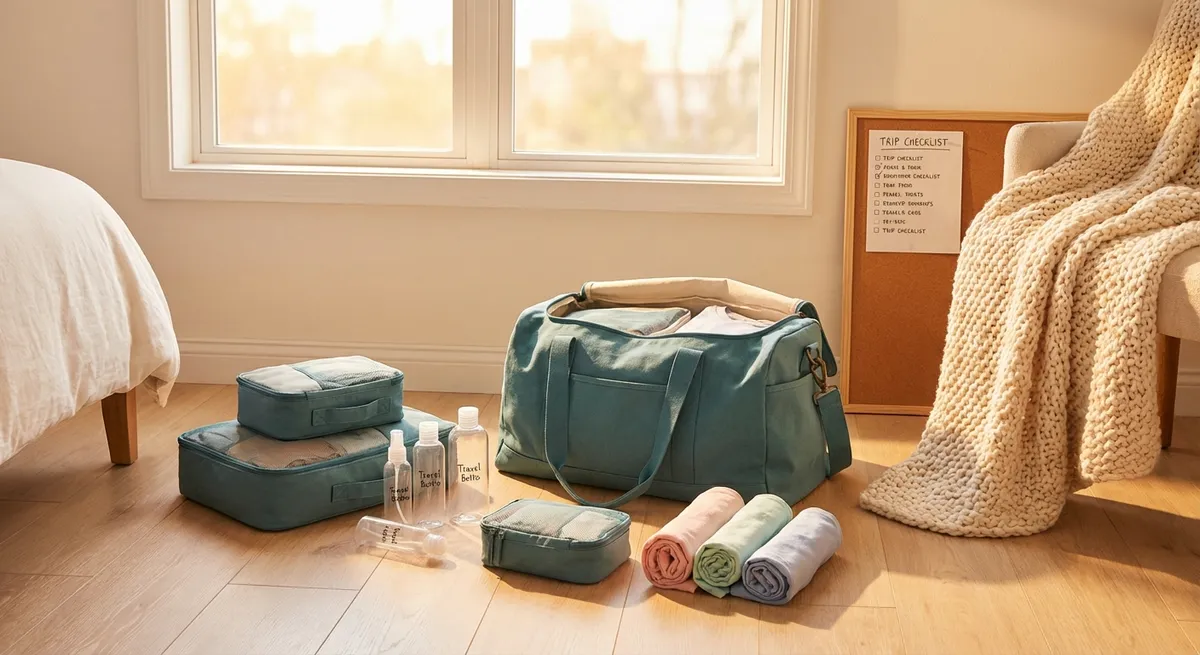
Start with travel-sized containers for your regular products. Fill them only halfway at first, then see how much you actually use during a typical trip. Adjust the amounts next time so you’re never carrying more than you need. Label each bottle clearly to avoid mid-trip guessing or mix-ups.
Store your complete toiletry kit in a clear, zippered pouch that meets airport liquid rules. Keep it stocked and stored in your closet or near your suitcase so that when a trip pops up, you’re not hunting for toothpaste, contact solution, or sunscreen.
Make a tiny “restock checklist” (travel-size toothpaste, razor heads, mini sunscreen, etc.) and glance at it after each trip. When something runs low, refill or replace it right away. This one habit turns your toiletry packing from a 20-minute chore into a 10-second grab.
Tip 4: Give Every Item a ‘Job’ Before You Pack It
One of the simplest ways to avoid overpacking is to make every item in your bag “prove” its usefulness. Before something goes into your suitcase, ask: “What specific job is this doing on this trip?”
Clothing should ideally serve at least two roles—like a shirt that works for both sightseeing and a casual dinner, or shoes that are comfortable enough for walking but look good enough for nicer restaurants. If an item can’t multitask, it needs a very good reason to come along (specialized gear or formalwear, for example).
The same rule applies to tech and gadgets. Do you really need a tablet, laptop, and e-reader, or can one device do the job for this trip? Chargers, adapters, cables, and batteries add weight quickly, so pack only what your devices actually require.
This mindset naturally trims the extras that sneak into your bag “just in case.” Instead, you’ll travel with items that earn their place—and you’ll feel the difference every time you hoist your bag into an overhead bin or carry it up a flight of stairs.
Tip 5: Pack with Airport Security and Day-One Access in Mind
Think beyond your suitcase and plan how you’ll move through the entire first day of your trip. This helps you pack in a way that feels effortless from the moment you leave home.
Use a smaller personal item (like a backpack or tote) as your “Day One command center.” Into this go: travel documents, wallet, phone, a pen, a light layer, any required medications, earbuds, a small snack, and a reusable water bottle (empty before security, refill afterward). If you wear glasses or contacts, include a tiny kit for both.
If you’re flying, pack your liquids and electronics so they’re easy to remove at security. A clear pouch for liquids and a dedicated tech pocket for laptop/tablet can turn a stressful line into a streamlined moment. That ease sets the tone for the rest of your trip.
Finally, assume your checked bag might be delayed. In your carry-on or personal item, pack a micro “survival set”: a change of underwear, a clean shirt, any essential toiletries (within liquid limits), and one extra day of medications. If your main bag is late, you’ll still feel fresh, functional, and ready to explore instead of being stuck waiting in your hotel room.
Conclusion
Thoughtful packing isn’t about cramming more into your suitcase—it’s about making what you bring work harder for you. With a simple personal blueprint, versatile layers, a ready-to-go toiletry kit, purposeful items, and smart Day One planning, you’ll spend less time packing and more time enjoying where you’re headed. The more you repeat these habits, the more “travel ready” you’ll feel—no matter when the next adventure pops up on your calendar.
Sources
- U.S. Department of State – Travel Preparation Tips – Official guidance on key documents and pre-trip planning considerations
- Transportation Security Administration (TSA) – What Can I Bring? – Up-to-date rules on liquids, electronics, and items allowed in carry-on vs. checked baggage
- Mayo Clinic – Travel and Health – Advice on packing medications, health essentials, and staying well while traveling
- CDC – Traveler’s Health – Information on health-related items to consider packing based on your destination
- National Institutes of Health – Travel Advice – Practical health and safety considerations that can influence what you pack
Key Takeaway
The most important thing to remember from this article is that this information can change how you think about Packing Tips.