Travel doesn’t have to be complicated, exhausting, or wildly expensive. With a few smart systems in place, you can turn chaotic travel days into something that feels almost…effortless. These travel hacks aren’t about cutting corners; they’re about traveling smarter so you can focus on the good stuff: new cities, great food, and unexpected adventures.
Below are five practical, real-world strategies that frequent travelers quietly rely on—and that you can start using on your very next trip.
Build a “Grab-and-Go” Travel Kit Once, Use It for Every Trip
One of the biggest stressors in trip prep is packing from scratch each time. Instead, create a permanent “travel drawer” or pouch with essentials that never leave your travel gear.
Include items like:
- Travel-size toiletries in leak-proof bottles
- A compact first-aid kit (bandages, pain reliever, motion sickness tabs, blister patches)
- Universal adapter and a short extension cord
- A slim power bank and charging cables for all your devices
- A photocopy of your passport and a small amount of emergency cash in a major currency (like USD or EUR)
- A small microfiber towel and a pack of wet wipes
When a trip pops up, you’re already 70% packed. You just add clothes, destination-specific items (like a swimsuit or coat), and you’re done. Restock the kit as soon as you get home so it’s always ready.
This simple system dramatically reduces last-minute shopping, forgotten items, and that pre-trip anxiety spiral of “What am I missing?”
Use “Scenario Packing” Instead of Packing by Category
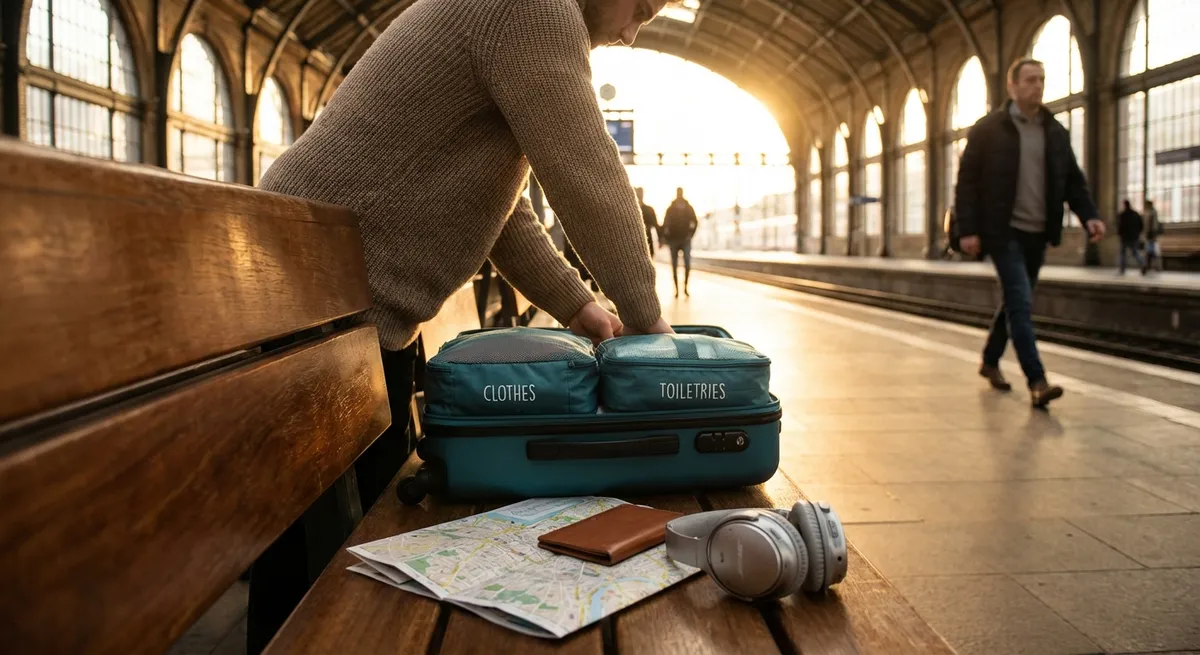
Most people pack by category: five shirts, three pants, two dresses, one jacket. That’s how you end up with a suitcase full of clothes and nothing that quite works together.
Try scenario packing instead. Visualize your days and pack full “outfit scenarios”:
- Airport/Transit outfit
- Casual sightseeing days
- One “nice” outfit for a special dinner or event
- Weather backup (rain, sudden cold, extra-hot day)
For each scenario, assemble a complete outfit from head to toe, including layers and shoes. Then cross-check which items can serve multiple scenarios—that’s what earns a spot in your bag.
This approach:
- Cuts down on overpacking
- Ensures you actually wear everything you bring
- Makes getting dressed on the road faster because you’ve already thought it through
Bonus hack: Stick to 2–3 main colors (like black/white/blue or tan/white/olive) so everything mixes and matches without effort.
Turn Your Phone into a “Mini Command Center” Before You Leave
Your smartphone can be a full control panel for your trip—if you set it up before you go. Do a 20-minute “trip prep” session:
- Download offline maps for your destination in Google Maps or Maps.me so you can navigate without data.
- Save key locations (hotel, airport, train station, meeting spots, favorite restaurants) as starred pins.
- Enable offline access to your boarding passes, hotel confirmations, and tickets—save PDFs and screenshots in a dedicated “Travel” album.
- Install local transport or taxi apps used in that country (e.g., local metro apps, Bolt, Grab, or regional rideshare services).
- Translate basics in advance with Google Translate (download the language offline) and save common phrases like “vegetarian,” “allergy,” or your hotel address.
This setup pays off when your data is spotty, you land tired at night, or you need to show a booking confirmation without hunting through emails. You’ll move like someone who’s been there before—confident and efficient.
Create a Simple Money Strategy to Avoid Fees and Panic
Money stress can drain the fun out of travel. Set up a basic system before your trip so you’re not learning the hard way at a foreign ATM.
Here’s a straightforward approach:
- Choose one primary travel card with no or low foreign transaction fees and good fraud protection.
- Notify your bank of your travel dates and destinations (some banks still recommend this to reduce card blocks).
- Plan your cash strategy: In many countries, cards are widely accepted, but you’ll still want some local currency for markets, tips, or small shops.
- Withdraw from ATMs at banks, not random standalone machines, to reduce the risk of high fees and card skimmers.
- When ATMs ask if you want to be charged in your home currency, always decline and choose local currency instead—this typically avoids a poor exchange rate markup.
Also, split your payment methods: keep one card in your wallet and one in a separate secure place (money belt, inside a different bag, or in your hotel safe). If one is lost or compromised, you’re not stranded.
Use “Micro-Planning” to Protect Your First 24 Hours
You don’t need every minute of your trip scheduled—but the first 24 hours benefit massively from a loose, well-thought-out plan. After a long flight or drive, decision fatigue hits hard.
Before you go, decide on:
- Transport from the airport/train station: Which option you’ll use, roughly how much it should cost, and how to find it.
- Your check-in backup plan: What you’ll do if your room isn’t ready—nearest luggage storage, a café you can hang out in, or a nearby park.
- A simple first meal: One or two easy, nearby spots saved in your maps. Don’t rely on wandering around hungry and jet-lagged.
- One light activity: A walk along a main street, a local viewpoint, or a short museum visit—something low-pressure that gets you oriented.
This “micro-plan” turns your arrival from stressful and aimless into calm and purposeful. Once you’ve slept and eaten, you can switch into spontaneous mode knowing you’ve already landed on your feet.
Conclusion
Smooth travel isn’t about being perfect; it’s about putting a few clever systems on autopilot so your energy is free for exploring. A ready-to-go travel kit, scenario-based packing, a phone prepped as your command center, a simple money strategy, and a stress-free first 24 hours can completely change how your trips feel.
Use just one of these hacks on your next journey, notice what gets easier, and then layer in more over time. Before long, you won’t just be going places—you’ll be traveling like someone who knows exactly what they’re doing.
Sources
- U.S. Department of State – Travel Advisories - Official guidance on safety, local conditions, and entry requirements for destinations worldwide
- Centers for Disease Control and Prevention – Travelers’ Health - Up-to-date health recommendations, vaccines, and region-specific health notices for travelers
- Transportation Security Administration (TSA) – What Can I Bring? - Detailed information on what is allowed in carry-on and checked luggage, including liquids and medical items
- European Consumer Centre – Currency Conversion & DCC Explained - Explanation of dynamic currency conversion and why choosing local currency is often better for travelers
- Google Maps Help – Download Offline Maps - Step-by-step instructions for saving and using offline maps while traveling without reliable data
Key Takeaway
The most important thing to remember from this article is that this information can change how you think about Travel Hacks.