Travel doesn’t have to be a chaotic blur of lost reservations, overstuffed bags, and airport stress. With a few clever tricks, you can cut through the noise, stay flexible, and actually enjoy the ride from door to destination. These practical, real-world hacks are designed to save you time, money, and mental energy—so you can focus on the fun parts of travel, not just the logistics.
Turn “Dead Time” Into Bonus Time
Travel days are full of awkward gaps: layovers, check-in windows, boarding lines, and train delays. Instead of seeing these as wasted hours, treat them as bonus pockets of time you can plan for.
Pre-download podcasts, audiobooks, or language lessons before you leave home so you’re not at the mercy of weak airport Wi‑Fi. Turn a 2-hour layover into a “mini reset”: stretch, hydrate, and walk the terminal instead of doomscrolling at the gate. At your hotel or rental, use the 20–30 minutes between arrival and dinner to set up your “home base”: unpack just your essentials, charge your devices in the same spot every time, and snap a quick photo of your room layout and key locations (safe, outlets, window, door) in case you come back late and tired.
By treating these micro-moments as intentional time blocks—rest, plan, learn, or move—you arrive at each new stop feeling less frazzled and more in control of your day.
Use “Mirrored” Digital Backups for Peace of Mind
Lost phone, spotty service, or a dead battery can derail a trip—unless you’ve already planned around it. Create a lightweight “mirrored” system so your most important info is available in multiple ways, even offline.
Before departure, save your key details (passport photo, visa confirmation, emergency contacts, hotel addresses, travel insurance, and ticket confirmations) in three places: a secure cloud folder, an offline notes app on your phone, and a single-page PDF you can print. Name that PDF something obvious like “TRIP-ESSENTIALS-2026” and keep a printed copy in your day bag.
On your phone, pin or favorite critical notes and screenshots so they’re easy to find even when you’re stressed. For reservations and boarding passes, take screenshots in addition to using apps—many ticket scanners will work from a screenshot if an app fails to load. This layered backup approach gives you options when tech doesn’t cooperate, and it makes problem-solving at airports, borders, or hotels much less intimidating.
Design a “First 24 Hours” Plan (Then Stay Flexible)
The most stressful part of many trips is the first 24 hours: new city, new rhythm, and a brain full of logistics. A simple hack is to plan that first day with extra care, then leave room for spontaneity later in the trip.
Decide three things in advance: how you’re getting from the airport/train station to your accommodation, where you’ll get your first meal or snack, and one light, low-pressure activity (like a walk through a nearby park or neighborhood). Save maps for these in offline mode and write key phrases or addresses in the local language in your notes app in case you need to show them to a driver or local.
Keep your arrival day intentionally “under-scheduled.” If you sleep badly on the plane or hit unexpected delays, you won’t feel like the entire trip is ruined. Once you’ve had that first shower, meal, and short walk, you’ll be in a much better headspace to decide what you’re genuinely excited to do next—rather than forcing yourself through a rigid checklist while jet-lagged.
Treat Your Day Bag Like a Mobile Command Center
Your day bag is the unsung hero of any trip, and the way you organize it can make or break your daily experience. Instead of throwing everything in one compartment, think of your bag as a small workspace with “zones.”
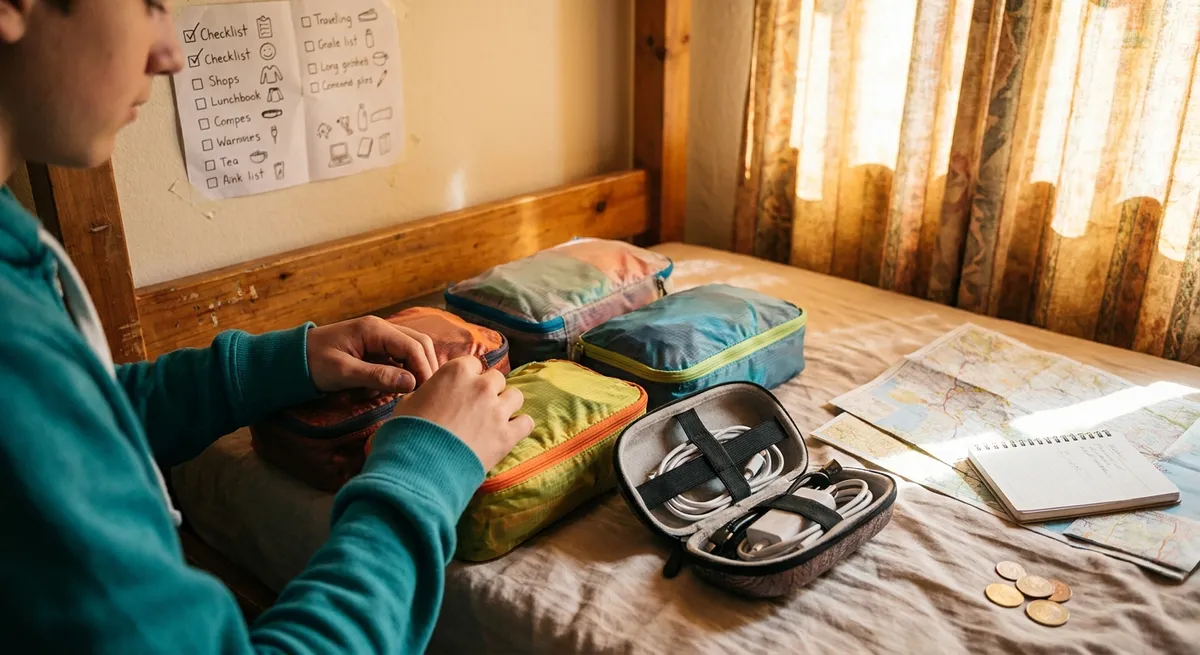
Use pouches or small zip bags to divide your gear: one for “health + comfort” (meds, lip balm, hand sanitizer, tissues, bandages), one for “power + tech” (chargers, power bank, adapters, cable), and one for “docs + money” (passport, cards, local cash, key cards). Keep the most frequently used items—like a refillable water bottle, lightweight scarf or layer, and sunglasses—in easy-access outer pockets.
At the end of each day, spend two minutes resetting your bag: refill your water bottle, put tickets or receipts in one spot, and check your battery levels. This tiny habit prevents that frantic “Where is my passport? Did I lose my card?” spiral when you’re boarding a bus, paying for a meal, or going through security.
Hack Airline and Transit Stress with Small, Smart Moves
You don’t need elite status to make flights and long transit days feel more manageable. A few strategic habits can dramatically upgrade the experience, even in economy.
For flights, check in as early as possible to improve your seat selection odds, and always download your airline’s app for real-time gate changes and delay alerts. If you have a connection, treat your layover like a mini-mission: find your next gate first, then look for food, restrooms, or a place to sit. This single step reduces a massive amount of last-minute panic when gates change or boarding starts early.
When booking, pay attention not just to price, but also to connection times and airport layout—sometimes a slightly longer layover at a well-organized airport is worth more than a tight connection that risks missed flights and extra stress. For buses and trains, arrive a bit early to choose your seat area, secure space for your bag, and grab snacks or water before boarding. These small decisions, repeated throughout a trip, add up to a smoother, calmer travel experience.
Conclusion
Smart travel isn’t about having the fanciest gear or squeezing every second into a packed schedule. It’s about stacking simple, thoughtful habits that make each step—from planning to transit to daily wandering—just a little easier. When your documents are backed up, your first 24 hours are gently structured, your day bag is dialed in, and your “dead time” has a purpose, you free up mental space for what actually matters: noticing the details, connecting with people, and fully experiencing where you are.
Start with one or two of these hacks on your next trip, then layer in more as they become second nature. Over time, you’ll build your own personalized system that makes every journey feel more confident, more relaxed, and a lot more fun.
Sources
- U.S. Department of State – Traveler’s Checklist - Official guidance on documents, backups, and safety planning before international trips
- Centers for Disease Control and Prevention – Travel Health - Up-to-date health, vaccination, and destination-specific advice for travelers
- Transportation Security Administration (TSA) – What Can I Bring? - Detailed rules on what is allowed in carry-on and checked baggage, helpful for planning your day bag and packing strategy
- International Air Transport Association (IATA) – Travel Center - Information on travel regulations, passport and visa requirements, and health measures by country
- Rick Steves’ Europe – Packing & Planning Tips - Practical, experience-based guidance on light packing and trip organization from a long-time travel expert
Key Takeaway
The most important thing to remember from this article is that this information can change how you think about Travel Hacks.