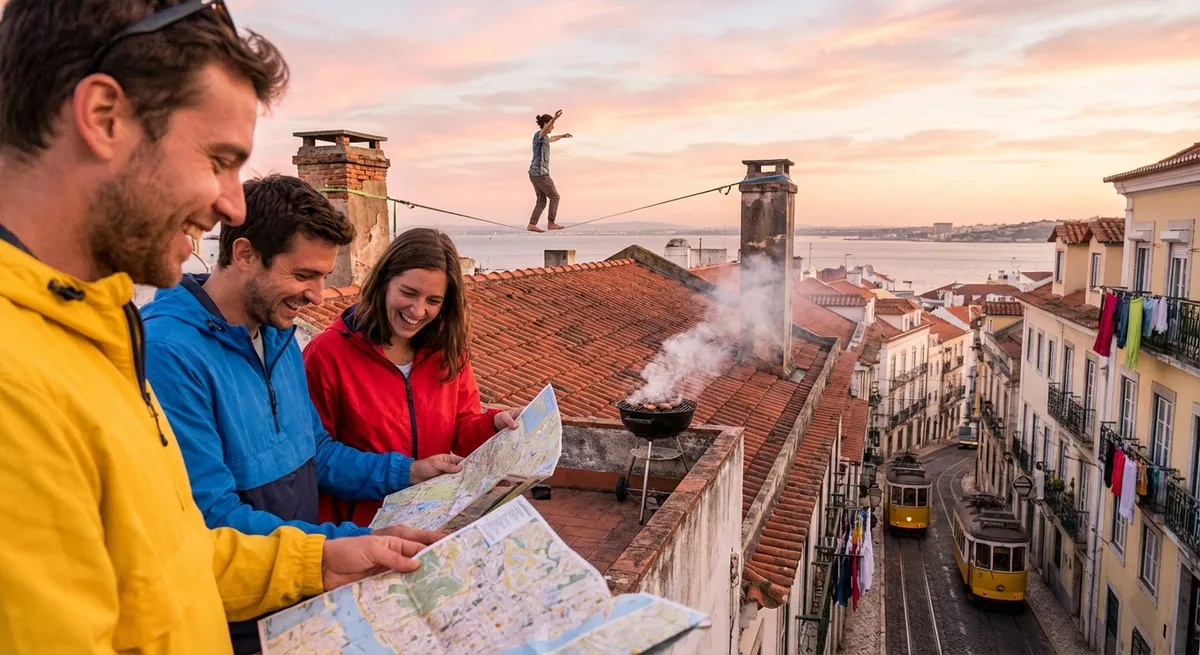
Big, bucket-list cities are amazing—but they can also be crowded, pricey, and overwhelming. Micro‑adventure cities are different: compact, easy-to-navigate destinations where you can land on a Friday and feel like you’ve actually had a vacation by Sunday night.
Think canal‑laced Ghent instead of only Brussels, Asheville instead of Atlanta, Porto instead of Lisbon. These smaller urban hubs pack in culture, food, and nature without the stress of a mega‑metropolis. Below, you’ll discover how to spot them, why they’re perfect for quick trips, and 5 practical tips to make your next micro‑adventure city break unforgettable.
What Makes a Great Micro‑Adventure City?
A micro‑adventure city isn’t defined by its population size alone—it’s about the feel of the place and how quickly you can plug into it.
Look for cities with a walkable or bikeable center, a clearly defined “heart” (like a historic quarter, riverfront, or plaza), and easy access to at least one green or blue space—think waterfronts, hills, parks, or trails. These features make it possible to bounce between café culture, local markets, street art, and sunset viewpoints in the span of a single day.
Connectivity matters too. The best micro‑adventure cities are accessible via regional trains, low-cost flights, or short drives from major hubs. That means you can fly into a big airport, hop a quick connection, and be checking into your guesthouse by early afternoon. You’ll spend more time wandering and less time waiting in transit lines.
Finally, these cities tend to have strong local identity. Maybe it’s a food specialty (hello, Bologna), quirky architecture (hello, Tallinn), or a legendary music scene (hello, Nashville). That sense of “this could only happen here” is what transforms a quick city break into a story you’ll be telling for years.
How to Spot Hidden‑Gem Urban Destinations
You don’t need insider contacts to uncover micro‑adventure cities—just a strategic way of searching.
Start with the big place you think you want to go (say, Vienna or Bangkok), then zoom out on the map and look for mid-sized cities 1–4 hours away by train, bus, or car. Plug a few names into image searches and tourism board sites; you’ll quickly see which ones have that magic mix of character, nature, and culture.
Scan low-cost carrier routes and regional rail maps—these often highlight second‑tier cities that locals love but tourists under‑visit. If a place has a lively local food scene, a weekly market, some live music or art spaces, and at least a handful of boutique stays or hostels, you’re probably onto something good.
Read recent traveler reviews across multiple platforms to confirm the vibe aligns with what you want. Look for comments about safety, walkability, and whether a weekend felt “enough” or “too rushed.” If people keep saying “I could have stayed longer, but two days was perfect to get a feel,” you’ve found a strong micro‑adventure candidate.
5 Practical Tips for Micro‑Adventure City Breaks
1. Anchor Your Stay Near a “Crossroads Street”
In a compact destination, your accommodation choice can make or break the flow of your trip. Rather than chasing the cheapest room on the outskirts, prioritize a “crossroads street”—a main thoroughfare or plaza where multiple forms of life intersect: cafés, small shops, transit stops, and maybe a local market.
Staying within a 10–15 minute walk of this area means you can:
- Grab breakfast without planning.
- Drop shopping bags back at your room mid‑day.
- Pivot your plans easily if the weather changes.
- Walk home safely at night on well‑lit streets.
To find these crossroads spots, zoom in on an online map and toggle between “restaurants,” “bars,” “attractions,” and “public transport.” When you see multiple clusters overlap, that’s your sweet spot.
2. Build One “Big Arc” Walk Per Day
Micro‑adventure cities are perfect for what I like to call the “big arc walk”: a loose, scenic route that connects several neighborhoods, viewpoints, and food stops in one satisfying loop.
Instead of bouncing back and forth across town, sketch a single arc each day. For example:
- Start in the historic center for coffee.
- Wander through a market or local shopping street.
- Continue to a riverside path or park for fresh air.
- Climb (or ride) to a viewpoint for golden hour.
- Drop back down into a different neighborhood for dinner.
Use a map app to quickly draw this route and save a few pinned spots, but keep it flexible. The goal isn’t to tick off every “must‑see”—it’s to feel the city’s rhythm with your own two feet (or bike tires).
3. Time Your Arrival to Sync With Local Life
When you’re only in town for a couple of days, your arrival time matters more than you might think. Landing at midnight or mid-afternoon rush hour can eat into the limited energy and daylight you have.
Aim (when possible) to arrive mid-morning or early afternoon. This gives you enough time to:
- Drop your bags.
- Take a quick “reset” shower or snack.
- Do a light first wander before sunset.
Before you go, check whether your destination has siesta hours, early closures on certain days, or big weekly events (like Sunday markets or Friday night food trucks). Time your trip so that at least one of your full days overlaps with a high‑energy local moment rather than a shut‑down day when everything is closed.
4. Pick One Theme Per Trip (and Let It Steer You)
In small cities, you don’t need a packed checklist—but a simple theme can help you make better decisions on the fly. Choose a loose focus based on what excites you most about that destination:
- “Rooftops and viewpoints”
- “Street art and local design”
- “Markets and bakeries”
- “Riverside walks and bridges”
- “Live music and craft drinks”
Once you have a theme, let it guide your micro‑choices. Faced with two potential neighborhoods? Choose the one with the better street art or more riverside cafés, depending on your theme. This keeps your days cohesive and satisfying instead of randomly busy.
You’ll finish the weekend feeling like you experienced the city through a particular lens, instead of skimming a dozen unrelated sights.
5. Use the “Last Half‑Day” Rule to Beat Departure Stress
That final half‑day before you head home is where quick city breaks often unravel—people either overstuff it with activities or waste it anxiously watching the clock.
Try this rule: make your last half‑day hyper-local and low‑stress. Stay within a 15–20 minute radius of your accommodation or the station/airport transfer point. Do things that require minimal logistics, like:
- Returning to your favorite café.
- Grabbing picnic snacks from a market for the journey.
- Visiting one small museum or viewpoint you missed.
- Sitting in a park people-watching with a coffee.
Pack 90% of your things the night before and lay out your departure clothes. That way, your final morning feels like bonus time in the city instead of a mad scramble to stay on schedule.
Balancing City Buzz With Quick Escapes to Nature
One of the biggest advantages of micro‑adventure cities is how close they often sit to wild or semi-wild landscapes. Whereas major capitals might require full-day trips to reach hiking trails or beaches, smaller hubs usually give you nature within a short ride.
Before you go, research easy add-ons like:
- A short, marked hiking loop that starts at a bus or train stop.
- A waterfront promenade or lake with rentals for kayaks or paddleboards.
- A hilltop viewpoint accessible by funicular or a modest walk.
- A nearby village reachable in under an hour by public transport.
Plan one “city + nature” combo day where you do a big arc walk in the morning, then escape outward for the afternoon. You’ll come home feeling mentally reset in a way pure city breaks rarely offer.
Why Micro‑Adventure Cities Belong on Your Travel Radar
In a world obsessed with hitting the biggest names—Paris, Tokyo, New York—smaller, character-rich cities might not dominate your social feeds. But they deliver something many travelers are quietly craving: lighter logistics, lower costs, closer contact with local life, and the satisfaction of really settling in—even if you’re only there for 48 hours.
They’re perfect for:
- Long weekends when you can’t take much vacation time.
- First-time solo trips (walkable cores and friendly vibes help).
- Return visits to regions you already love, but want to see differently.
- Mixing with one “headline” destination for a more balanced itinerary.
Next time you open a map to plan a trip, try this: find the big city you’ve always wanted to see… then let your gaze drift one or two train stops away. Somewhere just off that main line is a micro‑adventure city waiting to become your new favorite weekend playground.
Conclusion
Micro‑adventure cities prove you don’t need a massive metropolis or a month-long itinerary to have a memorable, energizing trip. With the right destination and a few smart strategies—like staying near a crossroads street, designing daily “big arc” walks, and protecting your last half‑day from stress—you can land on Friday and fly home Sunday feeling like you actually had a vacation.
The next time wanderlust hits but your schedule (or budget) says “keep it short,” skip the obvious capitals and scan for compact cities with big personality. Those are the places where your travel time stretches furthest—and where every corner can feel like the start of a new story.
Sources
- UN World Tourism Organization – Tourism and Culture – Overview of how cultural experiences shape urban travel and destination appeal
- European Commission – Sustainable Urban Mobility – Insights into walkability, public transport, and why mid-sized cities are often easier to navigate
- OECD – Tourism Trends and Policies – Data and analysis on shifts toward lesser-known destinations and regional cities
- National Geographic Travel – City Guides – Examples of how smaller cities combine culture, nature, and local life for travelers
- U.S. Department of State – Traveler’s Checklist – Practical guidance for planning short international trips and staying organized
Key Takeaway
The most important thing to remember from this article is that this information can change how you think about Destinations.