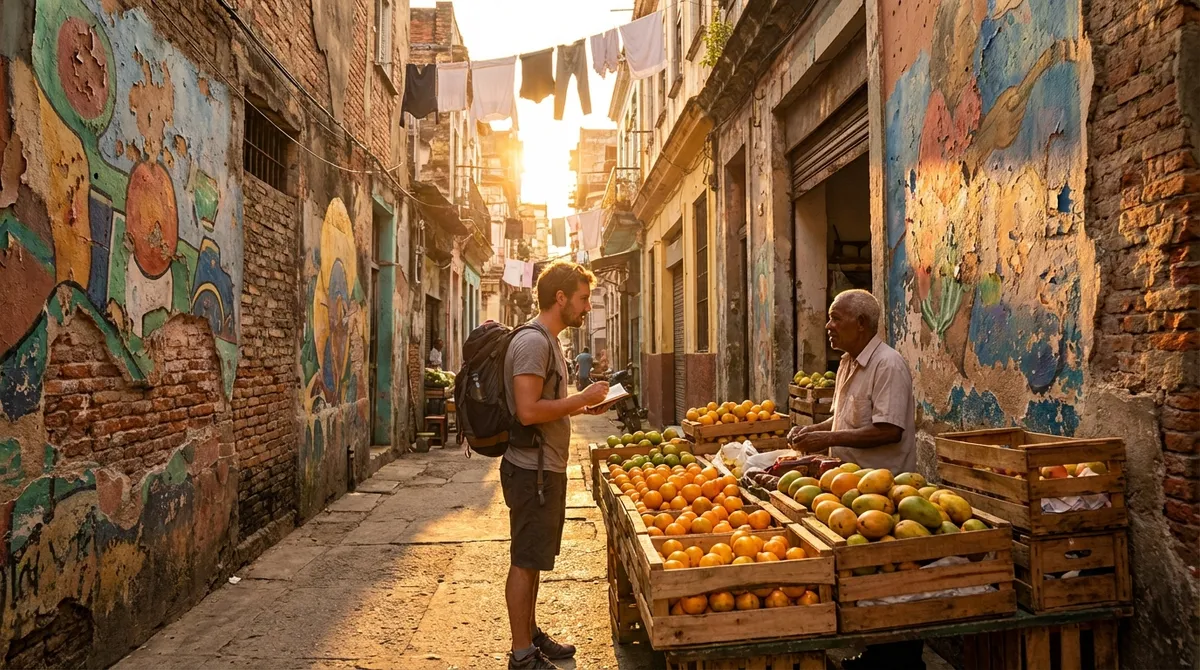
Sometimes the best way to really feel a destination isn’t to cover the whole city—it’s to zoom in. One neighborhood. One set of streets. One compact “world” you explore slowly, on foot, with curiosity turned all the way up. This style of travel is perfect if you’re short on time, overwhelmed by options, or just craving a more authentic connection to a place.
Let’s turn your next city trip into a focused micro-adventure built around a single neighborhood—rich in flavor, stories, and small discoveries you’ll actually remember.
Why One Neighborhood Can Be a Whole Trip
When you stop trying to “do the city” and instead choose one area to truly explore, everything changes. Your pace slows down. You notice details—like the way locals line up for coffee, the daily rhythm of street vendors, or the tiny bakery that never makes it into guidebooks.
Neighborhood-based travel also removes a lot of stress. No rushing across town to chase landmarks. No juggling complex transit routes. Instead, you’re walking, wandering, and letting surprises find you. You get to feel like a temporary local, not just a passerby with a checklist.
This approach works beautifully whether you’re in Lisbon, Tokyo, Chicago, or Cape Town. The neighborhood becomes your “travel lab,” where you test new foods, navigate side streets, pick up a few local phrases, and absorb daily life that most visitors miss.
Tip 1: Choose Your Neighborhood With Intention
The secret to a great micro-adventure is picking the right base. Instead of starting with “top attractions,” think in terms of vibes:
- Do you want café culture and people-watching, or markets and street food?
- Are you more into historic architecture, creative street art, or waterfront walks?
- Do you prefer lively nightlife or quiet, residential corners?
Search for phrases like “best neighborhoods for food in [city]” or “local areas to stay in [city]” and cross-check several sources. Look at a map: is the neighborhood walkable? Are there parks, plazas, markets, or rivers nearby to explore on foot? Then confirm basics like safety, transit access, and walkability using official city or tourism websites.
Once you pick your spot—maybe Kreuzberg in Berlin, Polanco in Mexico City, or Le Marais in Paris—commit to really staying present there. Let it be your orbit, not just a place you sleep.
Tip 2: Build a “Local Life” Day Instead of a Checklist
Instead of plotting a rigid schedule of attractions, design a day that mirrors local life:
- Start with a morning ritual at a neighborhood café or bakery. Watch how long people linger, what they order, and how they greet staff.
- Visit a nearby market—fresh food, flea, or artisan. Notice what’s in season, what people are actually buying, and what stalls draw crowds.
- Pop into ordinary places: supermarkets, pharmacies, bookshops, playgrounds, laundromats. These tell you more about a destination than many museums.
- Time your day around local rhythms: lunch when locals eat (which might be 2–4 p.m. in Spain), evening strolls in warmer climates, or late-night snacks in cities that come alive after dark.
You can still include a museum, viewpoint, or famous site within the neighborhood—but let those be accents, not the spine of your day. The main experience is walking the streets, trying the food, and noticing how life unfolds around you.
Tip 3: Use Food as Your Neighborhood Compass
In a tight radius, food becomes your map. Instead of hunting only for “must-try” spots, blend highly-rated places with spontaneous finds:
- Ask your accommodation host, barista, or bartender, “Where would you eat if you had 10 euros/dollars and wanted something great nearby?”
- Look where locals are lining up—not just tourists. A small crowd at odd hours is a great sign.
- Try one “anchor” meal at a well-known or recommended spot, then balance it with hidden gems: corner bakeries, food trucks, family-run diners, or set-menu lunch spots.
- Visit the same coffee shop or bar twice. Familiarity—even over 48 hours—can create surprising little connections and conversations.
If language is a barrier, point, ask for the “most popular dish,” or even say, “I’d love to try something local you recommend.” You’re not just eating; you’re gathering stories and small moments that tie you emotionally to the place.
Tip 4: Walk Like You Live There (With a Flexible Goal)
The best micro-adventures happen at walking speed. Start each day with one light goal—then stay open to detours:
- Aim for a park, waterfront, or viewpoint as your rough destination.
- Use smaller streets whenever you can safely do so; that’s where neighborhood character comes alive.
- Pause at corners and look up—balconies, signs, graffiti, rooftop gardens, and laundry lines all tell you something about how people live.
- Carry a small notebook or use your phone to jot quick impressions: a smell, a sound, a phrase you overheard, a dog everyone seems to know.
Turn your walk into a loose “loop” so you’re not just walking straight out and back. Circle around, cross your own path, and try returning via a different route. You’ll start to build a mental map—a real sense of orientation that makes the neighborhood feel like yours for a little while.
Tip 5: Anchor the Experience With One “Meaningful Moment”
To keep your micro-adventure from blurring into other trips, intentionally create one meaningful experience tied to that neighborhood:
- Join a small neighborhood walking tour or food tour focused on that exact area.
- Take a short class or workshop nearby—cooking, dancing, photography, pottery, or language.
- Attend something community-based: a local festival, open mic, religious service (if appropriate), gallery opening, or amateur sports match.
- Spend sunset or early evening in a single spot—a plaza, bench, waterfront, or rooftop—and just observe life around you without rushing off.
This anchored moment becomes the emotional “hook” for your trip. Months later, you might forget the exact café name, but you’ll remember learning to make dumplings in a tiny kitchen, watching kids play soccer at dusk, or listening to live jazz in a bar that only locals seemed to know.
Conclusion
You don’t need endless days or a packed sightseeing list to get under the skin of a city. By choosing one neighborhood and exploring it deeply, you trade FOMO for presence, stress for serendipity, and generic memories for something far more personal.
On your next trip, try shrinking your map instead of expanding it. Pick a single neighborhood, walk it slowly, eat what it offers, and let ordinary moments be the highlight reel. That’s where cities stop being backdrops—and start feeling like places you truly touched.
Sources
- U.S. Department of State – Country Information - Official safety, entry, and local conditions guidance for planning city and neighborhood stays
- UN World Tourism Organization (UNWTO) - Data and insights on global tourism trends that support the value of slower, more local-focused travel
- Project for Public Spaces – What is Placemaking? - Explains how public spaces like plazas, markets, and parks shape neighborhood character and visitor experience
- Lonely Planet – How to Travel Responsibly - Practical advice on engaging with local communities and neighborhoods in a respectful, sustainable way
- National Geographic – The Case for Slow Travel - Discusses the benefits of slower, deeper travel styles that focus on connection over checklists
Key Takeaway
The most important thing to remember from this article is that following these steps can lead to great results.