Travel doesn’t just get easier with experience—it gets easier with the right habits. A few smart routines before and during your trip can erase a surprising amount of stress, save money, and protect your time.
These five practical habits aren’t about extreme minimalism or fancy upgrades—they’re about making every step of your journey feel calmer, more efficient, and more fun.
Build a “Departure Ritual” You Can Run on Autopilot
The night before you travel is when things most often go wrong: forgotten chargers, missing passports, or that sinking “did I lock the door?” feeling. A simple, repeatable departure ritual turns that chaos into a calm checklist you barely have to think about.
Create a short, written routine that you follow before every trip, whether it’s a weekend away or a long-haul adventure. Include essentials like: laying out your outfit and shoes, charging all devices, packing a small “first 24 hours” kit (toothbrush, meds, underwear, adapter, power bank), and placing your passport, wallet, and keys in one visible spot. Run through your home tasks too: trash out, dishwasher empty, windows closed, lights on timers if needed.
The goal is to reduce decisions when your brain is tired and excited. Keep your ritual on your phone’s notes app and actually check items off—don’t trust memory. Over time, you can refine it with “I wish I’d remembered…” items after each trip. This one habit prevents dozens of tiny stress points and late-night panic searches.
Turn Your Phone into a Travel Command Center
Your phone can be the difference between wandering lost and gliding through a new city like a local—if you set it up before you leave. Think of it as your portable control room and “Pack” it digitally the way you’d pack a bag.
Before leaving, download offline maps for every city you’ll visit in apps like Google Maps or Maps.me, and pin key places: your hotel, transit hubs, cafes with good reviews, pharmacies, and embassies or consulates if you’re traveling abroad. Screenshot all crucial info: boarding passes, hotel confirmations, transit tickets, and any QR codes—screenshots still work when apps or Wi‑Fi don’t.
Create a dedicated “Travel” folder on your home screen for airline apps, rideshare, translation apps, local transit apps, and currency converters. Enable important app notifications (flight status, gate changes, hotel check-in) but mute non-essential ones so your screen isn’t a firehose of distractions. This way, when something changes mid-journey, your phone is already primed to help instead of slow you down.
Use “Micro-Planning” to Tame Jet Lag and Transit Days
Most people either over-plan every minute or wing it completely. A smarter approach—especially on long travel days—is “micro-planning”: only structuring key anchor points in your day and leaving the rest flexible.
Start by identifying three anchors for your arrival day: your first proper meal, your first movement (walk, light stretch, short exploration), and your first sleep. Choose times for these that align with local time to help your body adjust—daytime exposure to natural light and avoiding long naps can make a big difference with jet lag.
Plan just enough to remove decision fatigue when you’re exhausted: know where you’ll get that first meal (even if it’s just a nearby café pinned on your map), how you’ll get from the airport to your lodging, and a simple, low-effort activity like a neighborhood walk or park visit. Everything else can be spontaneous.
This approach keeps you from collapsing in your room and losing a whole day to fatigue while still leaving room for organic discoveries. Instead of a rigid schedule, you’ve got a lightweight structure that makes your first 24 hours feel intentional, not chaotic.
Create a “Smart Money Flow” for Safer, Cheaper Spending
Money mistakes—hidden fees, bad exchange rates, frozen cards—can quietly drain your budget and your patience. Setting up a simple “money flow” before you depart keeps your spending safe, trackable, and mostly fee-free.
Use one primary card (ideally with no foreign transaction fees) for everyday purchases, and a backup card stored separately in your luggage or a money belt in case of loss or theft. Call or use your bank’s app to set travel notices if required, and confirm daily withdrawal and spending limits. If you’ll be abroad, research whether ATMs or cards give better rates in your destination; usually, local ATMs with major networks beat currency exchange booths.
Turn on transaction alerts via email or SMS so you can spot fraudulent charges quickly. Consider carrying a small emergency cash stash in the local currency, hidden separately from your wallet. For shared expenses with travel companions, use a split-bill app or shared note so no one is stuck doing awkward math at the end of the trip.
With this flow, you always know which card to use, how you’ll get cash if needed, and how you’ll track spending—saving you from “I hope this works” moments at hotel check-in or train stations.
Build a “Tiny Recovery Kit” to Bounce Back Fast
Travel is fun but physically demanding—early flights, new foods, different beds, and long days on your feet. A tiny personal “recovery kit” can turn a rough day into a manageable one and keep minor issues from derailing your plans.
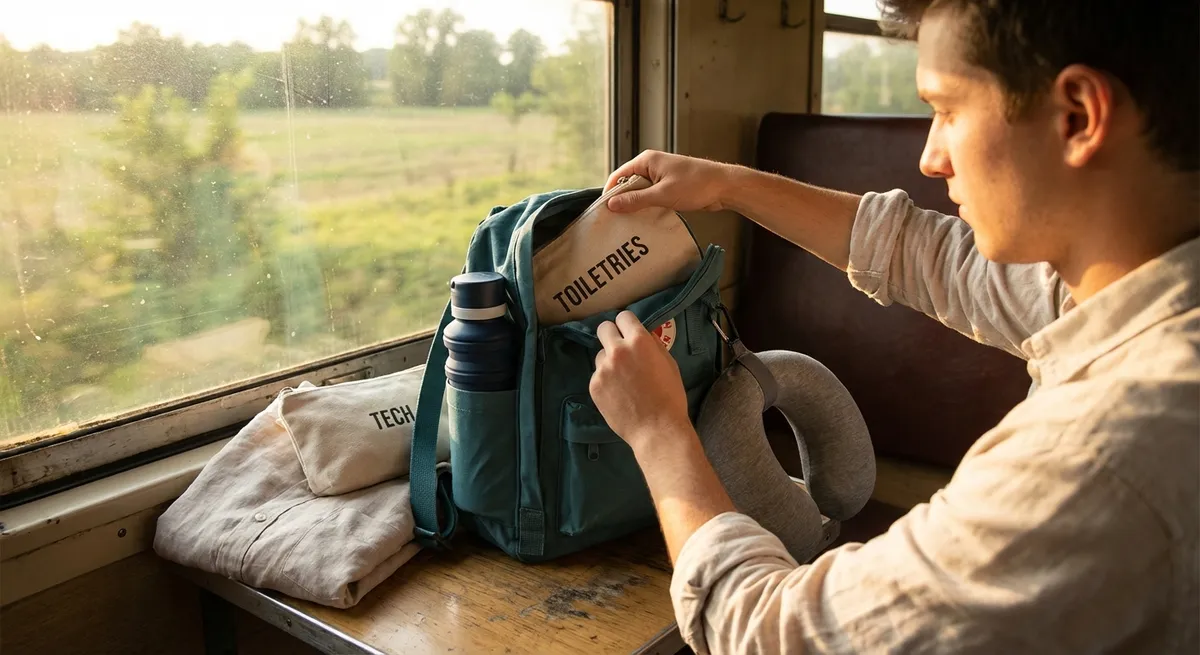
Assemble a small pouch (it can fit in a jacket or daypack) with essentials tailored to your body and typical issues. Common all-stars include: basic pain relief (ibuprofen or acetaminophen), motion sickness tablets if you’re prone to it, electrolyte packets for hot days or long flights, a few bandages and blister patches, hand sanitizer, lip balm, and a compact pack of tissues or wipes. If you take prescription meds, keep a 1–2 day backup dose here too, in original packaging if crossing borders.
Add one or two comfort items that help you reset quickly: a lightweight eye mask, foam earplugs, or a small packet of your favorite tea. The goal isn’t to carry a full pharmacy, but to solve 80% of predictable discomforts with something that weighs almost nothing. When you can quickly handle a headache, mild stomach upset, or chafing without hunting for a pharmacy in a new city, your entire trip feels more resilient and relaxed.
Conclusion
A smoother trip isn’t about memorizing hundreds of hacks—it’s about building a few reliable habits that follow you from journey to journey. A simple departure ritual, a phone that’s set up like a travel command center, light micro-planning, a clear money flow, and a tiny recovery kit together create a powerful safety net.
Once these habits are in place, every new destination feels less like a logistical puzzle and more like what you actually want: an adventure you’re fully present for. Start with one of these habits on your next trip, refine it, and then stack on the others. Your future travel self will be seriously grateful.
Sources
- U.S. Department of State – Travel Advisories - Official guidance on safety, documentation, and country-specific conditions
- Centers for Disease Control and Prevention – Travelers’ Health - Evidence-based advice on travel health, vaccines, and illness prevention
- Transportation Security Administration (TSA) – What Can I Bring? - Up-to-date rules on what’s allowed in carry-on and checked bags
- Federal Trade Commission – Credit, Debit, and ATM Cards - Guidance on protecting your cards and handling fraud while traveling
- Harvard Health – How to Prevent and Cope With Jet Lag - Research-based strategies for managing jet lag and adjusting to new time zones
Key Takeaway
The most important thing to remember from this article is that this information can change how you think about Travel Hacks.