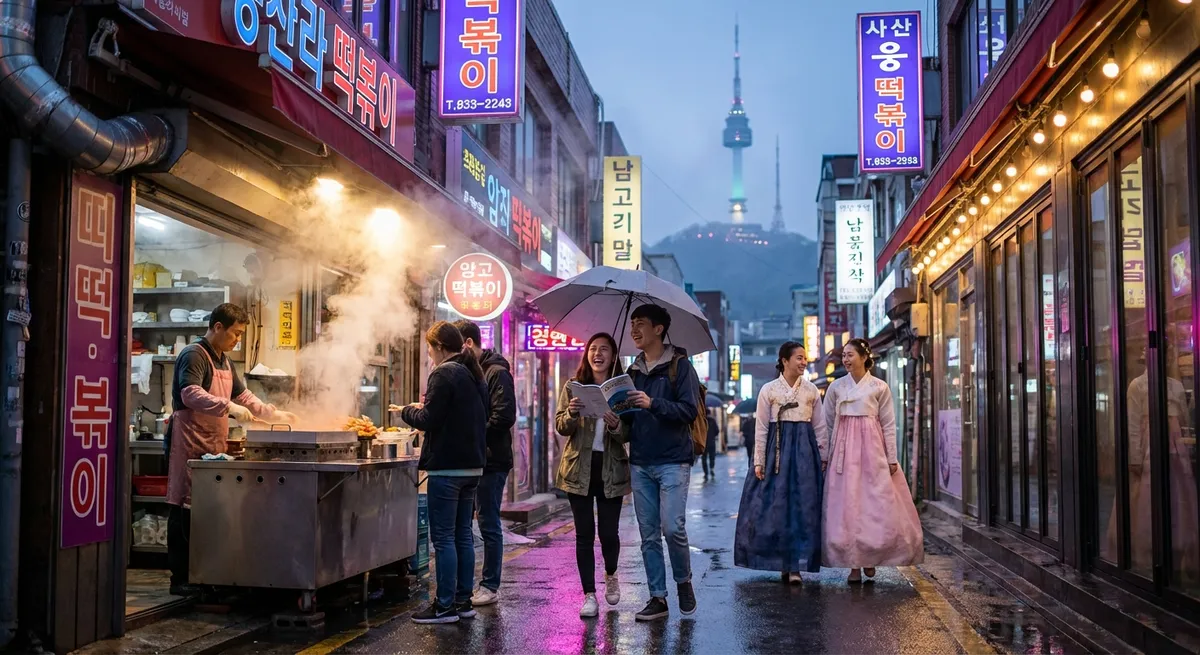
Seoul has a way of turning “I’ll come back someday” into “When can I move here?” Neon-lit streets, late-night food stalls, tranquil palaces, and cutting-edge tech all live side by side. If you’re planning your first trip, this guide will help you land confident, explore smart, and squeeze the most magic out of every day in South Korea’s capital—without feeling overwhelmed.
Getting Oriented: Neighborhoods That Shape Your Trip
Seoul is huge, but thinking in neighborhoods makes it feel instantly more manageable.
Myeongdong is your high-energy basecamp: street food, skincare shops, and easy access to subway lines that connect you almost everywhere. It’s ideal if you love being in the middle of the action and don’t mind crowds. Just north, Insadong and Bukchon Hanok Village offer a slower rhythm with galleries, teahouses, and traditional hanok houses; staying nearby makes early morning walks through quiet alleys feel like time travel.
Across the river, Gangnam matches its global reputation: sleek skyscrapers, designer stores, and stylish cafés. Staying here works well if you’re into shopping, nightlife, and K‑culture trends. Hongdae, near several universities, is where Seoul’s creative side shines: buskers, indie shops, and themed cafés that stay lively late into the night. For a calmer base that’s still central, consider areas around City Hall or Jongno—they give you quick access to palaces, markets, and subway lines with a bit more breathing room than Myeongdong.
As you pick where to stay, think honestly about your travel style: do you want quiet nights and day trips, or do you want to step out your door and be right in the buzz? In Seoul, both are easy—you just need to choose your “home” wisely.
Moving Around Like a Local: Transport Made Easy
Seoul’s public transport is one of the easiest ways to feel instantly capable in a new city. The subway is clean, safe, and well-signed in English, and usually faster than taxis during rush hour. Buses fill in the gaps and often drop you closer to specific attractions, though they can feel less intuitive at first.
A T‑money or Cashbee transit card is a must-have. You can buy and top it up at most convenience stores (like GS25, CU, 7‑Eleven) and subway stations, then just tap in and out on buses and trains. It also works in some taxis and even at vending machines. Downloading a local navigation app that understands Seoul’s bus and subway routes—like Naver Map or KakaoMap—will save you huge chunks of time and frustration, especially when Google Maps feels incomplete.
Taxis are plentiful and relatively affordable, but keep your destination written in Korean on your phone; many drivers don’t speak much English. Late at night, when subways slow down, taxis or ride-hailing apps like Kakao T are often the simplest route home. Walking is safe and pleasant in most central neighborhoods, though you’ll quickly learn that Seoul loves hills and stairs—comfortable shoes are non-negotiable.
Food Adventures: From Street Stalls to Stylish Cafés
In Seoul, eating isn’t just refueling; it’s one of the city’s essential experiences. Street food lanes in areas like Myeongdong or Gwangjang Market are perfect for grazing: tteokbokki (spicy rice cakes), hotteok (sweet pancakes), skewers, and mandu (dumplings) let you sample a dozen tastes in a single night. Most vendors are used to visitors, so pointing works fine if you don’t know the names yet.
Sit-down Korean BBQ is a must at least once. Many places are self-grill: staff bring you plates of marinated meat and side dishes (banchan), then you cook at your table. Look for restaurants busy with locals rather than the most Instagrammable sign—turnover is a good sign of quality and freshness. If you’re on a budget, kimbap shops and convenience store meals are surprisingly satisfying; triangle kimbap, simple ramyeon, and ready-to-eat snacks are a late-night lifesaver.
Café culture is its own attraction, from minimalist specialty coffee shops to dessert cafés themed around characters, flowers, or books. Use them as mini-rest stops between sightseeing bursts—they’re excellent spots to recharge, plan your next move, and watch local life unfold. Don’t hesitate to ask for mild spice (“mae‑an ge” or “not spicy”) if you’re sensitive; many places offer gentler options without judgment.
Culture, Etiquette, and Small Gestures That Go a Long Way
Seoul is modern and fast-paced, but small gestures of respect make your trip feel smoother and more connected. Bowing slightly when saying thank you (“gamsahamnida”) is always appreciated, even if your pronunciation isn’t perfect. On the subway, you’ll notice priority seats for the elderly, pregnant people, and those with disabilities—leaving them open (even if empty) is important.
In restaurants, it’s common to share dishes, and some spots have a minimum order of two servings for BBQ. Pouring drinks for others at the table, especially older guests, is considered polite; they’ll usually return the gesture. If you’re handed something with both hands, receive it with both hands too—it’s a simple way to show respect. When paying, placing your card or cash on the small tray rather than directly in someone’s hand is also normal.
You’ll see face masks worn more commonly than in many Western countries, especially if someone feels unwell or in crowded spaces. Public trash cans can be harder to find than you’d expect, so carrying a small bag for your own trash until you find a bin is practical and respectful. And while Seoul is very safe, normal city smarts—keeping valuables zipped and being aware in crowds—still apply.
Five Practical Tips to Make Your Seoul Trip Smoother
Here are five tested, traveler-friendly moves that make a noticeable difference:
- Pick up a local SIM or eSIM at the airport.
Fast data from day one makes translations, transit apps, and meeting points painless. Incheon Airport has multiple telecom counters with short-term tourist plans that often include extra perks like free subway rides or attraction discounts.
- Build your days around “clusters” instead of individual sights.
Seoul’s attractions naturally group: palaces + Insadong + Bukchon in one area, Myeongdong + Namsan Tower in another, Hongdae or Gangnam each as their own half-day. Planning by cluster cuts transit time and gives each day a satisfying rhythm.
- Start palace visits early and night markets late.
Gyeongbokgung and Changdeokgung feel completely different when you’re there at opening time, with softer light and fewer tour groups. Markets and shopping streets often come alive later in the day—aim to arrive after 6–7 p.m. for their full energy.
- Carry a small “comfort kit” for long days out.
Seoul days can stretch from morning palaces to midnight snacks. Pack a reusable water bottle, portable charger, tissues (public restrooms sometimes lack paper), and a lightweight layer for temperature swings between outside air and air-conditioned interiors.
- Learn a few ultra-useful Korean phrases and keep them handy.
Words like “hello” (annyeonghaseyo), “thank you” (gamsahamnida), and “excuse me” (sillyehamnida/jeogiyo) go a long way. Screenshots or a quick note on your phone can help you remember, and people are often noticeably warmer when they see you’re trying.
Conclusion
Seoul rewards curiosity: wander one extra block, pop into that busy restaurant, say yes to an unfamiliar snack, and the city keeps opening up. With a little planning—choosing the right neighborhood, mastering transit basics, and understanding a few local norms—you can spend less time feeling lost and more time soaking up what makes this place unforgettable.
Whether you’re here for K‑dramas, street food, design, or just the thrill of a city that never really slows down, Seoul is ready to meet you where you are. Land with a flexible plan, an open mind, and these practical tips, and your first visit will feel less like a quick trip and more like the start of a long-term love affair with the city.
Sources
- Visit Seoul – Official Travel Guide - Official city tourism site with up-to-date information on attractions, neighborhoods, and events
- Korea Tourism Organization - National tourism board with detailed guides on transportation, etiquette, and regional highlights
- Incheon International Airport – Traveler Information - Practical details on airport transport, SIM cards, and services for arriving visitors
- U.S. Embassy & Consulate in the Republic of Korea – Travel & Local Info - Safety, transportation, and local guidance aimed at foreign travelers
- Seoul Metro – Official Site - Maps, line information, and operating details for the city’s subway system
Key Takeaway
The most important thing to remember from this article is that this information can change how you think about Destinations.