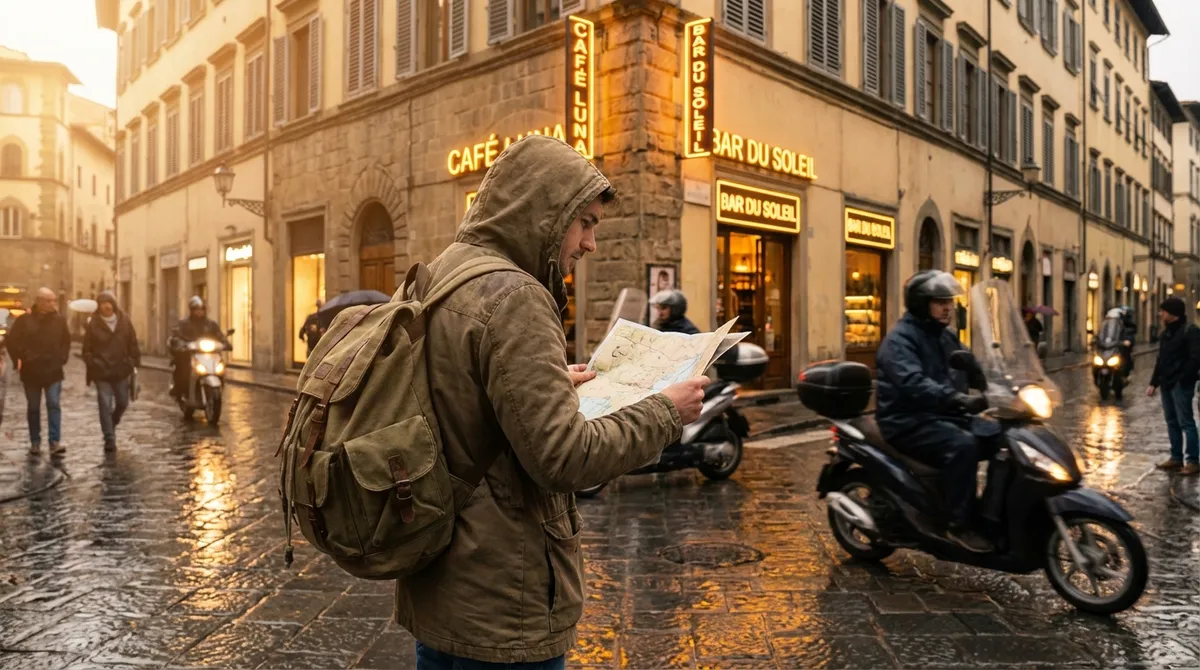
You’ve finally landed, dropped your bag at the hotel, and now you’re staring at a map thinking, “Where do I even start?” Instead of bouncing between tourist traps and random coffee shops, you can explore a brand-new city with the ease and confidence of a semi-local—on your very first visit. With a little strategy, you’ll find the good food faster, skip the worst lines, and uncover the spots that don’t show up on the first page of Google Maps.
This guide is all about turning any destination—from Lisbon to Seoul—into “your” city within 24 hours, with practical, repeatable tactics you can use on every trip.
Start With a “Compass Walk” Instead of a Checklist
Before racing to the main attractions, give yourself 60–90 minutes for a slow, intentional walk starting from where you’re staying. Think of it as calibrating your inner compass.
Walk in a loose loop rather than a straight line, staying within a comfortable distance from your hotel or apartment. Note where the nearest grocery store, pharmacy, ATM, and public transit stops are—they’ll matter later when you’re tired or the weather turns. Pay attention to how busy different streets feel at various times, which cafés are filled with locals versus tourists, and where you feel most comfortable. This simple walk instantly shrinks the city from “overwhelming maze” to “navigable neighborhood.”
While you’re walking, drop pins or short notes in your map app every time something catches your eye: a bakery that smells amazing, a courtyard you want to sit in later, a side street that looks fun at night. You’re not making decisions yet—you’re just building your own, personal “idea bank” for the rest of the trip. By the time you’re done, you’ll already have a mental map that makes the city feel far less foreign.
Practical Tip #1: Set a 1 km / 0.6 mile radius “comfort zone” around your stay and explore it on foot within your first few hours. Everything feels easier once that area feels familiar.
Use “Anchor Spots” to Structure Your Day
Once you’ve got a feel for the area, choose 2–3 “anchor spots” each day: a morning base, a mid-day attraction or neighborhood, and an evening area. Anchors create a loose structure without locking you into a rigid schedule.
Your morning anchor might be a café in a local neighborhood with reliable Wi-Fi and good coffee, where you can plan your day and watch the city wake up. Your mid-day anchor could be a museum, viewpoint, market, or famous landmark that you really want to see. Your evening anchor might be a neighborhood known for food, nightlife, or beautiful sunsets.
The magic comes in how you connect these anchors. Instead of jumping directly from one to the next, walk or take public transit between them in a way that lets you explore the “in-between” spaces—side streets, parks, residential areas, and smaller squares. This is where a lot of the surprising, memorable experiences happen.
Practical Tip #2: Plan only 2–3 “must-do” anchors per day and intentionally leave the time between them unplanned for roaming, detours, and spontaneous finds.
Eat Where Real Life Happens, Not Where the Sign Says “Best In Town”
Food is one of the fastest ways to understand a destination, but it’s also where tourists get trapped most easily. You don’t need complicated rules to avoid mediocre meals; just a smarter way of choosing where to sit down.
First, move at least a few blocks away from the biggest attraction in the area. Restaurants right next to major sights often rely on constant foot traffic, not repeat locals. Second, look at the ratio of locals to visitors. Are menus translated into five languages with photos of every dish, or do you see people in work clothes grabbing lunch? Clues like chalkboard menus in the local language, short but focused menus, and a steady flow of neighborhood traffic are good signs.
If you’re unsure, step inside, look at what people are actually eating, and trust that more than the marketing outside. And don’t be afraid to ask the staff, “What do people who live around here usually order?” That phrasing tends to get more honest, less touristy recommendations than “What’s most popular?”
Practical Tip #3: Before choosing a place to eat, walk past 3–5 options, then “loop back” to the one with the most locals, the shortest menu, and no one trying to drag you in from the street.
Ride Public Transit Once, Then Walk With Intent
Public transit is more than a way to get around—it’s a shortcut to how a city actually works. Even if you prefer walking, using local transit at least once or twice helps you understand the city’s shape, pace, and core routes.
On day one, learn one key metro, tram, or bus line that runs through important areas or neighborhoods you want to visit. Ride it for a few stops beyond where you think you need to go, just to see what’s along the line. Notice which stations seem busiest, which areas look residential versus commercial, and where people are getting on and off in large numbers.
Then, use walking to connect what you saw from transit. Walk between two transit stops instead of just appearing at one destination. This helps you understand distance, find quieter streets parallel to main roads, and discover places you never would have seen from a car or rideshare.
Practical Tip #4: Save an offline transit map and do one “orientation ride” on a main line—ride 3–5 stops, then walk back one or two stops above ground to connect the map in your phone with the reality on the street.
Build in “Micro-Routines” to Feel at Home Faster
Routines are what make home feel like home—and you can borrow that same comfort when you travel. A simple repeatable pattern in your day can make a new destination feel familiar surprisingly fast.
Pick one café, bakery, or small shop near where you’re staying and go back at roughly the same time each day. Order a similar item, say hello to the staff, and linger for a bit. By day two or three, you’ll often get a smile of recognition, maybe a small extra, and a feeling that you “belong” somewhere in the city.
You can do the same thing with a daily walk—say, from your stay to a local park—or a quick stop at the same corner store for water or snacks. These tiny repeats give you a sense of rhythm and make the rest of your exploring feel less chaotic. When everything else is new, having one or two familiar touchpoints can be surprisingly grounding.
Practical Tip #5: Choose one spot (café, park bench, bakery, or corner store) to return to every day of your trip. Treat it as “your” place—it anchors your experience and makes the whole city feel more welcoming.
Conclusion
You don’t need months in a destination to start moving through it with confidence. With a simple compass walk, a few daily anchors, smarter food choices, a quick transit orientation, and small daily routines, you can make almost any city feel approachable in under 24 hours.
The more you repeat this approach from trip to trip, the faster it works. Soon, landing somewhere new won’t feel like starting from zero—it’ll feel like opening a familiar playbook you can adapt to anywhere in the world. And that’s when travel really starts to feel effortless: not because the places get easier, but because you get better at meeting them.
Sources
- U.S. Department of State – Travel Advisories - Official safety and security information for destinations worldwide
- OECD Tourism Trends and Policies - Research and data on how travelers interact with cities and destinations
- UNWTO (World Tourism Organization) - Global tourism insights, including urban tourism trends and traveler behavior
- Lonely Planet – City Travel Tips - Practical, on-the-ground advice and examples for exploring major cities
- National Geographic Travel - In-depth destination stories that highlight local culture, neighborhoods, and everyday life
Key Takeaway
The most important thing to remember from this article is that following these steps can lead to great results.