Train travel in Europe feels like a cheat code for seeing more in less time. Instead of airport lines and highway traffic, you get panoramic views, walkable city centers, and the freedom to change plans on the fly. If you’ve ever dreamed of breakfast in Paris, a riverside stroll in Cologne, and tapas by sunset in Barcelona, this style of travel is absolutely within reach.
This guide walks you through how to turn Europe’s rail network into your personal adventure highway—plus five practical, tried-and-tested tips to make it smoother, cheaper, and way more fun.
Why Trains Are Europe’s Secret Travel Upgrade
Europe’s rail system is built for travelers who want movement and flexibility. Major stations sit right in the heart of cities, so instead of burning time on long airport transfers, you step off the train and straight into the action. High-speed routes connect capital to capital in a few hours, while regional lines drop you into smaller towns you’d never see on a typical fly-in, fly-out itinerary.
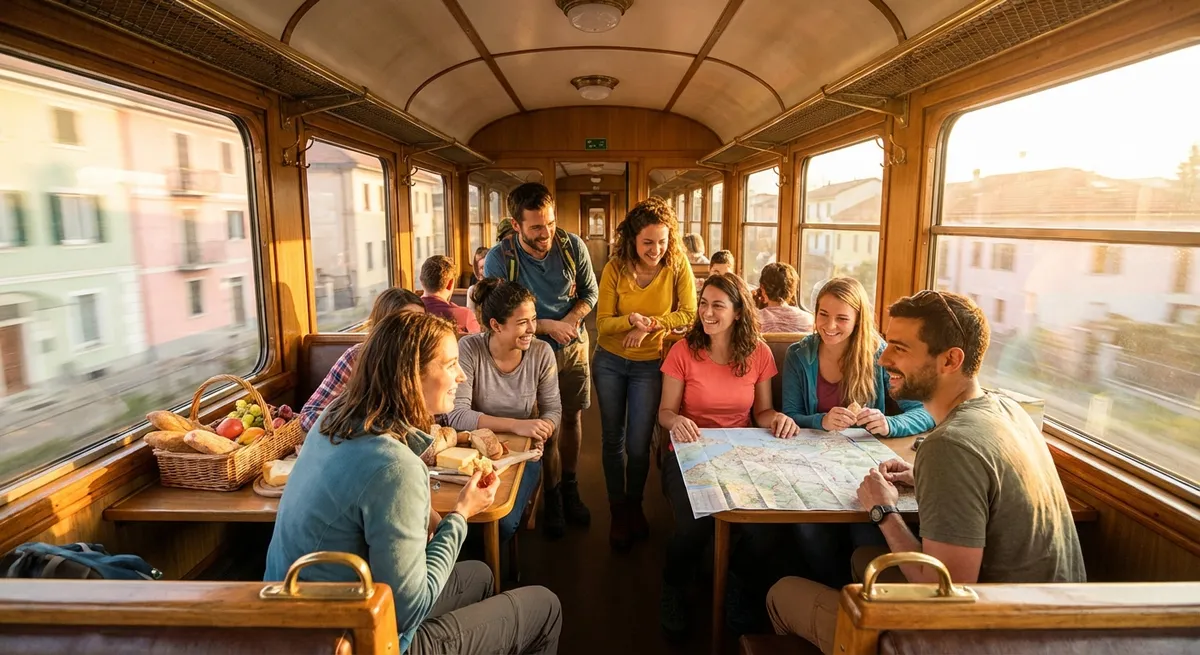
Another perk: trains are inherently social. You’re more likely to chat with locals, share snacks with fellow travelers, or pick up a spontaneous recommendation from the person sitting across the aisle than you ever would in a plane seat. The slower pace—especially on scenic routes like Switzerland’s glacier vistas or Italy’s coastal stretches—turns the journey into part of the experience, not just the dead space between destinations.
From a practical standpoint, trains often have more generous luggage allowances, fewer security hassles, and a more predictable schedule than budget airlines. When you factor in transit to and from airports, boarding times, and delays, many train journeys match or beat short flights door-to-door. And as a bonus, rail travel generally comes with a lower carbon footprint than flying, which is a win for the places you’re exploring.
Choosing a Rail Style: Passes vs Point-to-Point
Before you start plotting cities on a map, it pays to decide how you’ll pay for trains: individual tickets or a rail pass. If you’re focusing on just a couple of countries or a single region, point-to-point tickets bought in advance can be very economical. Many national rail operators release limited “super saver” fares if you book early and travel at off-peak hours—perfect for planners with fixed dates.
If your dream is a multi-country hop—think Amsterdam to Berlin to Prague to Vienna—then a rail pass like the Eurail or Interrail (for European residents) can offer flexibility and good value. Passes are especially useful if you want the freedom to change plans mid-trip, chase good weather, or linger in a city you fall in love with. Some passes let you choose a certain number of travel days within a set window, which works well for slower trips.
The trade-off is that a rail pass doesn’t automatically mean “all trains, any time.” High-speed and overnight trains often require seat reservations, which come with a small extra fee. In some countries (like France, Spain, and Italy), those reservations are mandatory for most long-distance routes. The sweet spot is often combining a pass for big jumps with occasional cheap regional tickets for short hops.
Building a Route That Actually Feels Relaxed
It’s tempting to cram as many cities as possible into your itinerary, but the magic of train travel really shines when you slow down. A smart approach is to build your route around “anchor cities” and “day-trip hubs.” Anchor cities are places where you’ll spend several nights—Rome, Vienna, Copenhagen—while hubs are smaller towns or nearby spots you can reach in under two hours by train.
When you’re planning, look at the train timetable first, not just the map. Some routes that look close geographically might be slow or require multiple changes, while others cover surprising distances in just a few hours. Aim for journeys of 2–5 hours between main stops; that’s enough time to enjoy the ride, have a meal, and maybe do some planning or journaling, without losing an entire day.
A helpful tactic is to alternate “big city energy” with more relaxed stops. For instance, pair Paris with Colmar, Munich with Salzburg, or Barcelona with Girona. This rhythm keeps you from burning out on museums, crowds, and constant stimulation. It also lets you experience different sides of a country—urban, historic, coastal, and countryside—without constant packing and unpacking.
Five Practical Tips to Make European Train Trips Effortless
1. Lock in Peak Journeys Early, Leave Gaps for Spontaneity
High-speed and popular scenic trains can and do sell out, especially on weekends and holidays. For any must-do legs—like Paris–London, Madrid–Barcelona, or Zurich–Milan—book those in advance as soon as your dates are set. This usually gets you the best price and guarantees a seat so you’re not standing in a packed carriage with your backpack in the aisle.
At the same time, deliberately leave some parts of your schedule open. Short regional hops (like Florence–Pisa or Munich–Nuremberg) often have multiple daily departures and don’t require seat reservations. These are perfect for spontaneous decisions when you hear about a festival, a market, or a cute town nearby. Think of it as “locking the skeleton” of your route while keeping the details flexible.
2. Travel Light Enough to Move Freely Through Stations
Train stations are wonderfully central—but that also means stairs, platforms, quick transfers, and occasionally sprinting for a departing train. Packing so you can move easily will massively improve your experience. Aim for one main bag you can comfortably carry up and down stairs plus a small daypack for valuables and essentials.
Most European trains have luggage racks at the ends of the carriages and smaller shelves above the seats. A slim suitcase or backpack is easier to stash than a giant, overstuffed case that blocks aisles. If you’re traveling in older cities with cobblestone streets, prioritize a bag with sturdy wheels or, better yet, a backpack with good support. Light packing isn’t just about weight—it’s about agility.
3. Use Station Time Strategically (Snacks, SIM Cards, and City Intel)
Major train stations are mini-cities: you’ll find supermarkets, bakeries, pharmacies, and often tourist information desks. Use this to your advantage. Stock up on snacks and drinks at regular grocery prices instead of buying everything on board. Grab a local SIM card or eSIM if you need mobile data—it’s often cheaper at stations than airport kiosks.
This is also your chance to pick up free city maps, ask about local public transport tickets, or learn about temporary closures or strikes that might affect your plans. In some countries, city transit passes can be bought right inside the station and cover both your ride to your accommodation and local buses or trams during your stay. A five-minute stop at the information desk can save you confusion and money later.
4. Always Check the Departure Board, Not Just Your Ticket
European train platforms can change at the last minute, and delayed trains may shift tracks or departure times with little warning. Instead of walking straight to the platform number printed on your ticket, make a habit of checking the big departure board (or station app) for your train number and destination every time.
Pay close attention to the final destination name; some trains split mid-route or share stretches of track. If your train says “Brussels–Amsterdam,” but the departure board shows “Brussels–Rotterdam,” double-check the intermediate stops you need. Announcements might be in local languages only, so train numbers and screens are often more reliable than your ear. This simple habit helps you avoid boarding the wrong train during a rushed transfer.
5. Time Your Travel Days to Maximize Sightseeing
Treat train days like half-days, not full write-offs. Morning departures around 8–10 a.m. let you check out of your accommodation, ride during daylight, and still arrive early enough to explore your new city in the afternoon and evening. Twilight or evening journeys can be magical too, but if you arrive late, you’ll spend your first night just locating your room and grabbing a quick bite.
If you’re crossing borders, avoid super tight connections; give yourself at least 30–45 minutes between trains, especially in unfamiliar stations. This buffer lets you find your platform, use restrooms, and possibly grab a quick meal. When you arrive, drop your main bag at your accommodation or use station luggage lockers, then head straight out. The more you design train days around daylight and energy levels, the richer your overall trip will feel.
Conclusion
City hopping by train in Europe turns logistics into part of the joy of travel. Instead of airports and transfers, you get café breakfasts in station halls, countryside views from your window, and the thrill of stepping off the train into a new city center as life buzzes around you. With a smart mix of pre-booked key routes, light luggage, and flexible short hops, you can see far more than a single city break ever allows—without feeling rushed or exhausted.
If you build your route around realistic travel times, use stations as resource hubs, and stay alert to departure boards, train travel quickly stops feeling intimidating and starts feeling like second nature. From grand capitals to small-town gems, the tracks are already in place; all you have to do is decide where you want them to take you next.
Sources
- Eurail Official Site - Detailed information on rail passes, reservations, and country coverage for non-European residents
- Interrail Official Site - Rail pass options, route ideas, and reservation info for European residents
- Deutsche Bahn (German Rail) – International Timetable - Comprehensive journey planner covering much of Europe’s rail network
- SNCF Connect (France) - Example of national rail booking, showing how advance fares and reservations work on high-speed routes
- European Environment Agency – Rail vs Air Emissions - Data on the environmental impact of different transport modes, including trains vs planes
Key Takeaway
The most important thing to remember from this article is that this information can change how you think about Destinations.