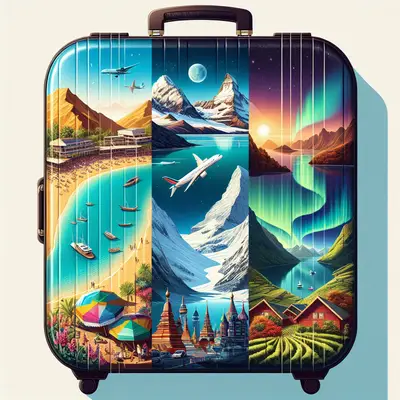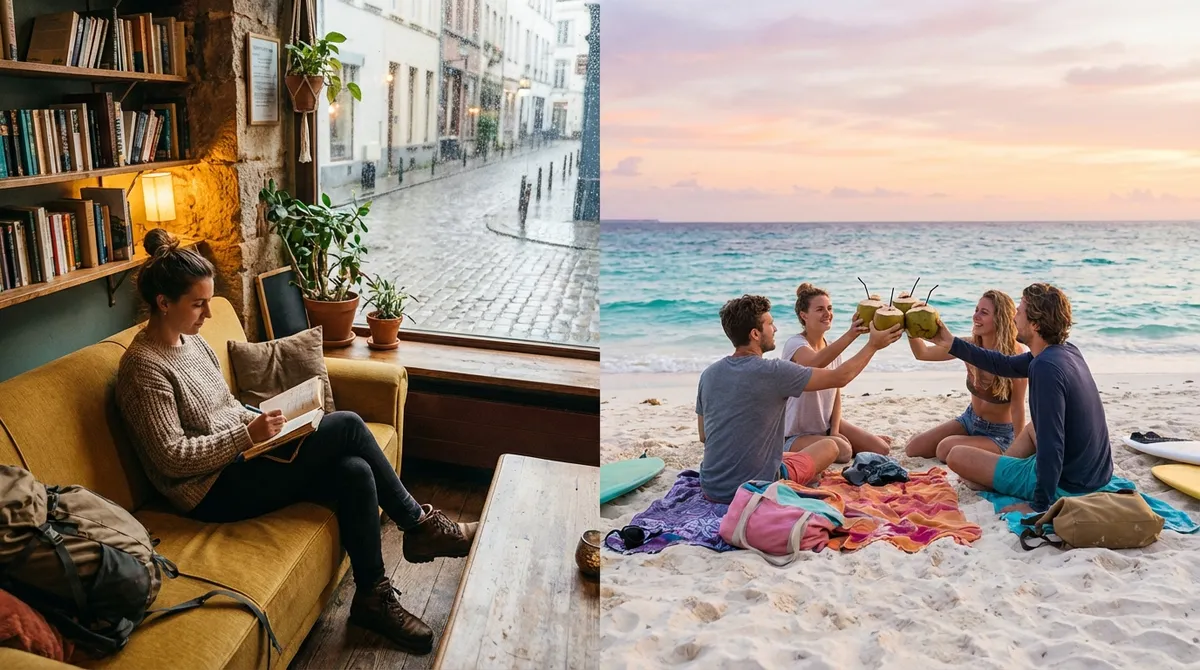
Planning a trip is easier when you stop asking “Where’s hot right now?” and start asking “What actually fits how I like to live?” Instead of chasing trending destinations, you can build a trip around your natural travel personality—whether you’re an early-morning explorer, café lingerer, nature chaser, or nightlife devotee.
This guide helps you match real-world destinations to specific “vibes,” so your next getaway feels less like a checklist and more like a perfect fit.
Find Your Travel Personality (And Own It)
Before you even open a flight search, get clear on how you actually like to spend time away from home. Many disappointing trips happen because people book for the photos, not their reality.
Ask yourself:
- Do you prefer slow mornings or being out the door at sunrise?
- Are you energized by crowds and buzz, or do you find yourself hunting for quiet corners?
- What makes you feel like, “Yes, this is why I travel”—food, landscapes, museums, nightlife, or people-watching?
- How much logistics are you willing to manage (multiple train connections, language barriers, rural stays)?
- What’s your ideal evening—rooftop bar, night hike, live music, or early night with a book?
Write down your honest answers. That becomes your “travel personality snapshot.” When you research destinations, look for places where your default day would feel natural, not forced.
Tip #1 – Build a “perfect travel day” template.
On one page, map your ideal day from breakfast to bedtime: where you’d eat, how much you’d walk, how social you’d be. Use this as your filter: if a destination makes that day easy, it’s a strong match. If everything looks like a compromise, keep searching.
Urban Energy: Cities for Culture, Coffee, and Constant Motion
If you love dense neighborhoods, public transit, and the feeling that something is always happening, you’re an urban-energy traveler. You want museums in the morning, street food at lunch, and maybe a gallery opening or rooftop view at night.
Consider cities like:
- Berlin, Germany – Creative neighborhoods (Kreuzberg, Neukölln), world-class museums on Museum Island, a legendary nightlife scene, and plenty of green space for decompression.
- Seoul, South Korea – Late-night food markets, K‑culture, efficient transit, and hyper-modern cityscapes next to traditional palaces.
- Mexico City, Mexico – A food-lover’s dream, from street tacos to fine dining; vibrant neighborhoods like Roma and Condesa; museums and parks woven into daily life.
In these destinations, you can build your days around neighborhoods instead of single attractions. Pick one or two districts per day and “live” there: coffee shop, lunch spot, park, local bar.
Tip #2 – Choose a neighborhood, not just a city.
Once you pick a city, spend more time on where in that city you’ll stay. Search “[city] best neighborhoods for first-time visitors” and cross-check with a map of transit lines. Aim for an area where you can walk to cafés, groceries, and at least one park or square. That neighborhood becomes your home base—and your trip will feel less rushed and more lived-in.
Nature-Focused Escapes: Destinations Built Around the Outdoors
If your perfect day involves trailheads, fresh air, and wide-open views, you’re a nature-first traveler. Instead of skyline photos, you want fjords, forests, mountains, or coasts. Your biggest question isn’t “What time does the museum open?” but “When is golden hour?”
Nature-forward destinations to consider:
- Queenstown & Wanaka, New Zealand – Adventure central: hiking, mountain biking, lakeside walks, plus jaw-dropping alpine scenery.
- Banff & Jasper, Canada – Turquoise lakes, wildlife spotting, and scenic drives through the Rockies. Perfect for road trips and day hikes.
- Norway’s fjord region (e.g., Bergen, Ålesund) – Dramatic cliffs, boat trips, and panoramic hikes with well-marked trails.
In these places, the landscape is your itinerary. Your schedule revolves around daylight hours, weather windows, and trail conditions. Off-time can be cozy: reading in a cabin, local hot springs, or hearty regional food.
Tip #3 – Plan around seasons and daylight, not just cheap flights.
For nature-heavy trips, shoulder seasons can be wonderful—but only if key activities are still available. Before booking:
- Check official park or tourism sites for trail openings/closures.
- Look up average sunrise/sunset times and typical weather.
- Confirm if seasonal transport (ferries, mountain lifts, scenic trains) is running.
Book once you’re sure your must-do experiences line up with the season—not just the airfare.
Coastal and Island Life: Destinations for Slow Days and Salty Air
If your ideal vacation smell is sunscreen and sea breeze, and you’re happiest with sand between your toes and something cold to sip, you’re a coastal traveler. You’re here for swims, seafood, and an easy rhythm of “beach, snack, nap, repeat.”
Great matches include:
- Lisbon & the Portuguese coast – Tram rides and tiled streets plus easy escapes to beaches in Cascais or Costa da Caparica.
- Greek Islands (e.g., Naxos, Paros, Milos) – Crystal waters, relaxed villages, ferry-linked islands so you can mix quiet and buzz.
- Hawaii, USA (e.g., Kauai, Maui) – Lush landscapes, beaches, hiking, and local food culture rooted in the islands’ history.
In coastal destinations, days tend to blend together in the best way. Anchor yourself with one or two “structured” activities (boat trip, snorkeling, cliff walk), then leave plenty of unplanned time for cafés, sunsets, and wandering seaside promenades.
Tip #4 – Balance your stay between “view” and “walkability.”
That dramatic clifftop villa or remote beach bungalow looks dreamy—but if you’re constantly calling taxis or driving long distances for every meal, the magic wears off fast. When booking:
- Zoom in on a map: can you walk to a mini-market, bakery, and at least one restaurant?
- Check reviews for phrases like “easy to walk to town” or “you really need a car.”
- If you want both seclusion and convenience, split your stay: a few nights remote, a few nights right in town.
Culture-Deep Dives: Destinations for Curious, Detail-Oriented Travelers
Some travelers are happiest when they’re learning—about history, architecture, traditions, and daily life. If you love guided walks, local markets, chats with hosts, and reading plaques at historic sites, you’re a culture-deep diver.
Consider destinations where history and living culture are tightly woven together:
- Kyoto, Japan – Temples, gardens, tea houses, markets, and seasonal traditions; a strong sense of place and ritual.
- Istanbul, Türkiye – Where Europe meets Asia: mosques, bazaars, ferry rides, and layered history visible in everyday streets.
- Rome, Italy – Ancient ruins, Renaissance art, neighborhood trattorias, and a culture that lives outdoors in piazzas and cafés.
In these places, “seeing the sights” is only the beginning. Your most memorable moments might be a conversation with a café owner, a neighborhood festival you stumble upon, or a small local museum.
Tip #5 – Pre-book one local-led experience that matches your interests.
Instead of packing your calendar with generic tours, choose one experience that plugs you into local knowledge—a food walk, architecture tour, market visit, or craft workshop.
When choosing:
- Read recent reviews looking for mentions of small group sizes and guide passion/knowledge, not just “fun.”
- Prefer experiences run by locals or local organizations, not just large international operators.
- Use that first tour to collect recommendations—guides often share their real favorite spots you won’t find in top-10 lists.
How to Use These Vibes to Design Your Next Trip
Once you know your travel personality, here’s how to turn it into a decision-making tool instead of a vague idea:
- Pick your primary vibe—and a backup. Maybe you’re 70% nature, 30% city café culture. That points you toward destinations that offer both, like Vancouver (city + mountains), Cape Town (coast + hikes), or Barcelona (urban + beach).
- Search destination ideas by activity, not just by name. Try searches like “best cities for café culture and walkable neighborhoods” or “mountain towns with car-free access.” This surfaces places you might not have considered.
- Check how many days your vibe really needs. Big, spread-out cities may need 4–5 days to feel satisfying; a compact island town might feel “done” in 2–3 unless you plan day trips.
- Match your travel companions’ personalities. Have each person describe their ideal travel day. If they don’t match, choose a destination that can support parallel plans—urban parks for the nature lover, cafés and museums for the city person, in the same area.
- Let go of destinations that don’t fit—no matter how trendy they are. It’s better to be deeply happy in an under-the-radar town that matches your rhythm than stressed in a hotspot that doesn’t.
Conclusion
The most rewarding trips aren’t always the most famous—they’re the ones that feel like they were built for you. When you start with your travel personality instead of a random bucket list, destinations almost choose themselves: cities for energy seekers, mountains for nature lovers, coastlines for slow-life fans, and culture-heavy hubs for curious minds.
Use your ideal day as your compass, choose destinations that support that rhythm, and sprinkle in a few well-timed, local-led experiences. Your photos will still look great—but more importantly, you’ll come home feeling like you actually lived the trip, not just collected it.
Sources
- UNWTO – World Tourism Organization – Global tourism data and trends that highlight how different traveler motivations shape destination choice.
- U.S. National Park Service – Official information on U.S. national parks, seasons, and planning resources helpful for nature-focused trips.
- New Zealand Department of Conservation – Trail conditions, safety advice, and seasonal information for outdoor destinations like Queenstown and Wanaka.
- Japan National Tourism Organization (JNTO) – Official guides to regions like Kyoto, with cultural, seasonal, and practical travel details.
- European Travel Commission – Visit Europe – Inspiration and planning resources for European cities, coasts, and cultural destinations.
Key Takeaway
The most important thing to remember from this article is that this information can change how you think about Destinations.