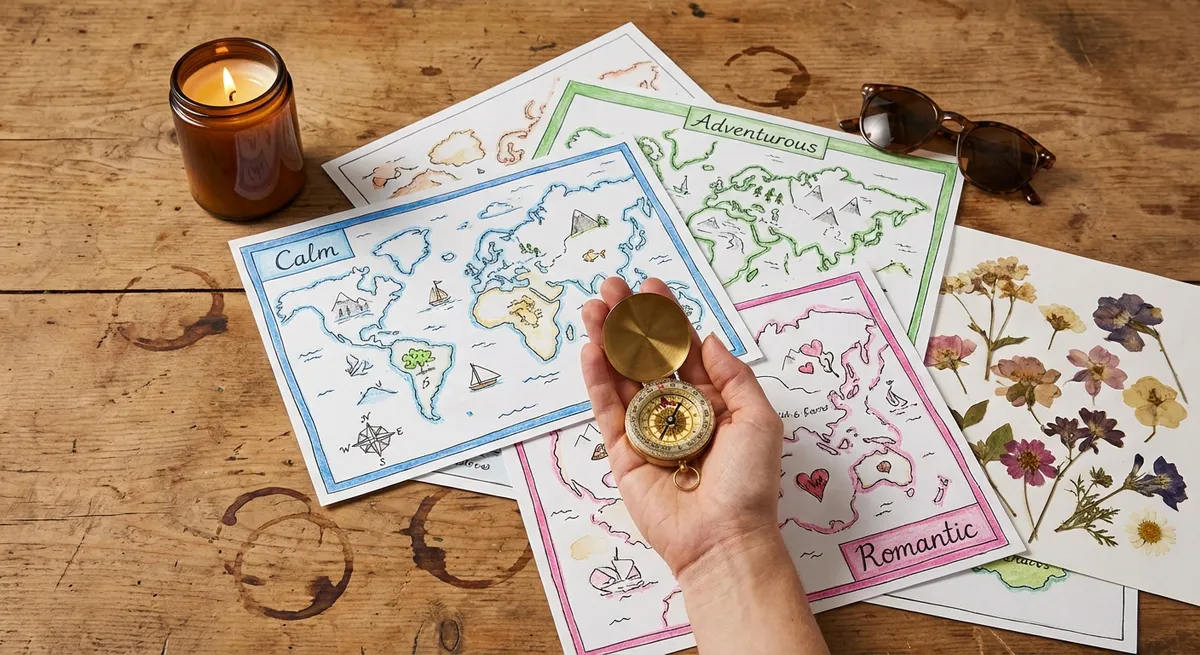
Travel planning usually starts with a place: “I want to go to Italy” or “I should finally see Japan.” But trips get a lot more rewarding when you flip that script and start with how you want to feel—energized, calm, social, creative, challenged—and then choose a destination that fits that vibe. This mood‑first approach turns random vacations into intentional experiences that actually recharge you in the way you need most.
Below, we’ll walk through how to pick destinations by mood, highlight real‑world places that fit each energy, and share 5 practical tips you can use to plan smarter, smoother mood‑matched trips.
Start With the Feeling, Not the Flight
Before you open a flight search tab, ask a better question than “Where should I go?” Try: “What do I need most from this trip?”
You might be craving deep rest, new scenery that sparks creativity, social energy, outdoor challenge, or sensory overload in the best way possible. Each of those feelings points to very different kinds of destinations—so clarifying your emotional goal up front makes planning more focused and less overwhelming.
Grab a notebook or your notes app and write down three words that describe how you want to feel on this trip. Examples: unplugged, inspired, cozy or curious, bold, alive. As you research destinations, check every option against those three words. If a place doesn’t support that feeling—no matter how trendy it is—let it go. The world is big; your time isn’t.
Practical Tip #1 – Build a “Mood Map” Before You Book
Create a simple two‑column list:
- Column A: “How I want to feel” (3–5 words)
- Column B: “Destination must‑haves” based on each feeling
For example, if you write “calm,” your must‑haves might be: walkable area, easy airport transfer, green spaces, quieter nightlife. Use this as a filter when reading destination guides and reviews so you’re choosing places that support the mood you’re chasing—not working against it once you arrive.
Calm & Grounded: Destinations That Let You Actually Exhale
If you’re burnt out, you don’t need a hyper‑scheduled city break; you need slowness built into the landscape. Look for smaller cities, coastal towns, and nature‑heavy regions with simple logistics and gentle rhythms.
Think of spots like:
- Ljubljana & Lake Bled, Slovenia – Compact, walkable capital with a riverfront full of cafés, plus serene Alpine lakes and mountains an easy bus ride away.
- San Sebastián, Spain – Beachfront promenades, gentle surf, and food‑centric days that revolve around pintxos and sunsets rather than jam‑packed itineraries.
- U.S. National Parks in shoulder season – Places like Acadia, Zion, or Great Smoky Mountains outside peak months give you quiet trails, sunrise viewpoints, and star‑filled skies.
What these destinations have in common: easy movement, access to nature, and environments that don’t pressure you to “do it all.” You can build in pockets of planned nothingness—slow mornings, long walks, unhurried meals—and let the place do the heavy lifting.
Practical Tip #2 – Protect “White Space” on Calm Trips
When you’re aiming for a restorative mood, plan less than you think you should. As a rule of thumb, schedule only one “anchor activity” per day (a hike, a massage, a half‑day tour) and leave the rest open. Block your calendar like this:
- Morning: Slow start, no fixed plans
- Midday: One activity or outing
- Late afternoon/evening: Open wandering or relaxing
This way your itinerary matches your goal: to return home feeling restored, not like you just survived an events marathon.
Energized & Curious: Destinations That Light Up Your Senses
Sometimes you want the exact opposite: to feel lit up, stimulated, and joyfully overwhelmed by new sights, sounds, and flavors. For that, you want dense, layered cities where every block offers something to explore.
Consider places like:
- Mexico City, Mexico – Street food, world‑class museums, colorful neighborhoods like Coyoacán and Roma, day trips to ancient sites like Teotihuacan.
- Seoul, South Korea – Neon‑lit streets, late‑night dining culture, traditional palaces alongside ultra‑modern architecture, themed cafés, and buzzing markets.
- Istanbul, Türkiye – Straddling Europe and Asia, with ferry rides across the Bosphorus, historic mosques, bazaars, and vibrant neighborhoods like Karaköy and Kadıköy.
These destinations feed your curiosity constantly: you can hop between art, food, history, nightlife, and street scenes with minimal transit time. The key is not attempting to cover everything, but to ride the energy without burning out.
Practical Tip #3 – Use “Neighborhood Days” to Avoid Exhaustion
Instead of racing across a big city each day, assign each day to one or two neighboring districts. For example, in Mexico City:
- Day 1: Roma & Condesa
- Day 2: Centro Histórico
- Day 3: Coyoacán & San Ángel
Search “[city name] neighborhoods guide” and mark a few clusters on an offline map (Google Maps or Maps.me). Plan your meals, attractions, and cafés within those zones. You’ll walk more, commute less, and actually soak up the character of each area instead of only seeing subway stations and the inside of rideshares.
Challenged & Accomplished: Destinations That Push Your Limits (Safely)
If what you’re seeking is a sense of achievement—a physical challenge, a big view earned step by step, or a skill learned far from home—you’ll want destinations where the main attractions are experiences, not just photo ops.
Examples:
- Patagonia (Chile & Argentina) – Multi‑day treks like Torres del Paine’s W or O routes, glacier views, and wild, wind‑carved landscapes.
- New Zealand’s South Island – Hiking (called tramping), adventure sports in Queenstown, glacier walks, and scenic drives.
- Japan’s mountainous regions (e.g., the Japanese Alps) – Village‑to‑village hikes, hot springs at the end of a trek, and seasonal trails with rewarding viewpoints.
These trips can be transformative, but they also require more planning: fitness preparation, gear lists, permits, weather windows, and safety considerations.
Practical Tip #4 – Train for Your Trip Like It’s Part of the Vacation
Once you book a challenge‑heavy destination, treat the next few months of training as “Phase 1” of the trip. Build a simple routine around what you’ll actually be doing:
- If you’re hiking: practice with a loaded backpack on local trails or stairs.
- If you’re cycling: increase your weekly mileage gradually and ride in similar terrain (hills vs. flat).
- If you’re doing water activities: take a basic swimming or safety course if you’re rusty.
Not only will this reduce injury risk and make the experience smoother, but it also extends the joy of the trip—you’ll feel the destination every time you train.
Creative & Inspired: Destinations That Spark New Ideas
Maybe you’re not looking for rest or adrenaline but a creative reset: somewhere that shifts your perspective, feeds your imagination, and sends you home with fresh ideas.
Think about:
- Lisbon & Porto, Portugal – Tile‑lined streets, viewpoints over red roofs, a thriving café culture, and a growing art and tech scene.
- Berlin, Germany – Street art, experimental galleries, layered history, diverse neighborhoods, and a nightlife scene that spills into day.
- Montreal, Canada – Bilingual culture, festivals, design, music, and a strong café and coworking scene ideal for a “work‑from‑elsewhere” stretch.
Creative destinations tend to offer strong public spaces (parks, waterfronts, plazas), vibrant neighborhoods, and lots of “third places” (cafés, bars, bookstores) where you can people‑watch and let your mind wander.
Practical Tip #5 – Design a “Creative Routine” on the Road
Instead of packing every day with attractions, build a light routine that nurtures creativity:
- Start mornings in the same café for a few days—journal, sketch, or write while you people‑watch.
- Pick one local bookstore or gallery each day and let yourself browse without an agenda.
- Take photos not just of famous landmarks, but of patterns: doors, signs, street art, or textures.
You’ll leave with more than photos; you’ll have seeds of new ideas tied to specific corners of the city.
Putting It All Together: One Trip, Many Moods
Most journeys don’t fit neatly into one box. You might want three days of city buzz followed by a quiet week by the sea, or a challenging trek with a soft landing in a cozy town afterward. That’s where combining nearby destinations by mood works beautifully:
- Pair Tokyo’s energy with Hakone’s hot springs.
- Balance Barcelona’s urban buzz with Costa Brava’s coastal calm.
- Match Cusco’s cultural depth with Sacred Valley hikes and a slower village stay.
Start with your mood priorities, choose one primary base that fits, then add a contrasting second stop as a “counterweight.” You’ll get that satisfying feeling of variety without over‑complicating your logistics.
Conclusion
When you start with how you want to feel and let that guide where you go, every part of your trip—from the flight search to the final day—becomes more intentional and more rewarding. Calm isn’t an accident; it’s built into destination choice and a light itinerary. Energy isn’t just luck; it’s choosing cities that feed your curiosity. Challenge, inspiration, and connection all follow the same pattern.
Use your mood as your compass, your must‑haves as your map, and these 5 practical planning moves to shape trips that actually give you what you’re craving from your time away. The world is full of incredible places; the magic happens when you match the right destination to the version of you that’s ready to show up there.
Sources
- U.S. National Park Service – Find a Park – Official information on U.S. national parks, including seasons, logistics, and safety guidance
- New Zealand Department of Conservation – Great Walks – Detailed info on multi‑day treks, preparation, and safety in New Zealand
- Japan National Tourism Organization (JNTO) – Official destination guides for cities, regions, and nature areas across Japan
- Portugal Official Tourism Website – Overview of cities, coastal regions, and cultural highlights in Portugal
- Korea Tourism Organization – VisitKorea – Practical guides to Seoul’s neighborhoods, attractions, and trip planning essentials
Key Takeaway
The most important thing to remember from this article is that this information can change how you think about Destinations.