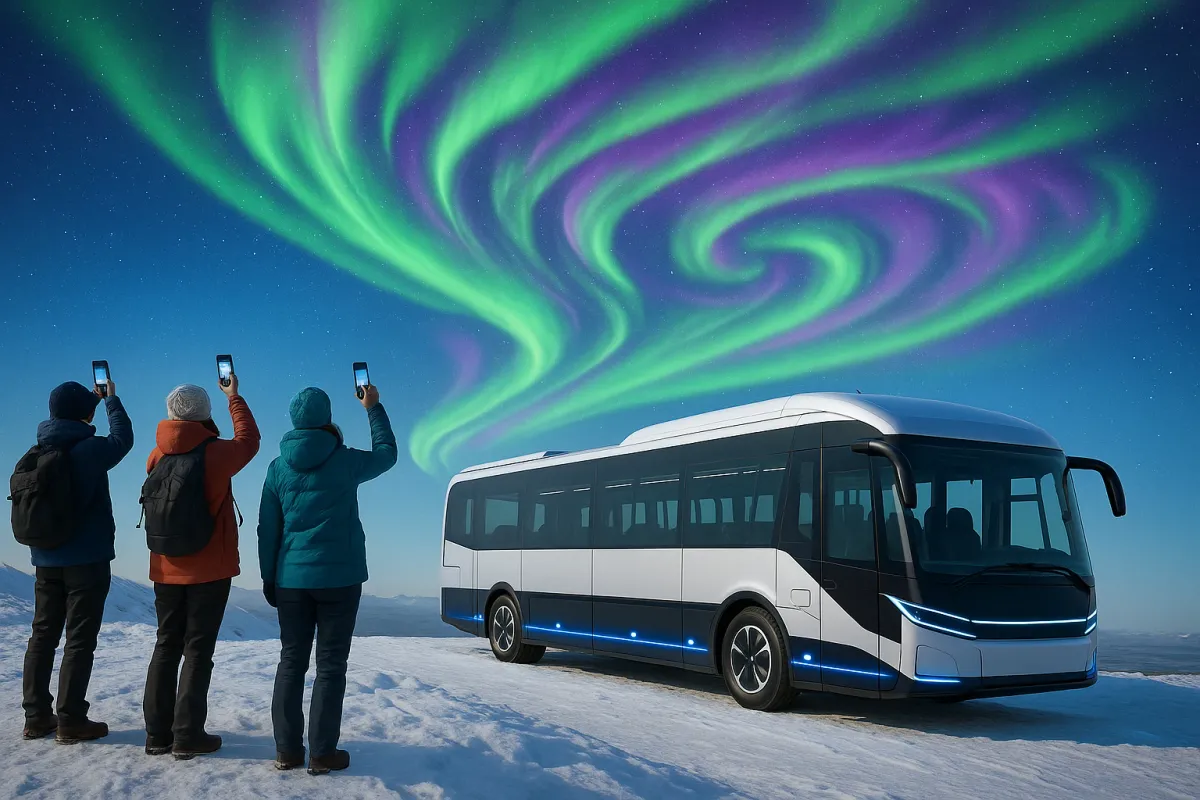
If the Northern Lights have been sitting on your bucket list forever, 2025 might finally be your year. A recent feature, “The Best Places And Times To See The Northern Lights From My Own Experience”, has been trending online—and it’s not a coincidence. Scientists have confirmed we’re in the peak years of the solar cycle (known as Solar Cycle 25), which means aurora activity is stronger, more frequent, and more visible than it’s been in over a decade.
That’s turning classic aurora destinations—like Tromsø, Iceland, Finnish Lapland, and Northern Canada—into some of the hottest cold-weather trips of the moment. But a Northern Lights trip isn’t like a city break: you’re chasing a natural phenomenon that doesn’t care about your vacation days. Below, we’ll walk through how this year’s heightened aurora buzz can work in your favor, and how to actually plan a trip that maximizes your odds of seeing the sky explode in color.
Where the Northern Lights Are Really Popping Right Now
The viral Northern Lights article making the rounds is part of a much bigger trend: travelers aren’t just dreaming about the aurora anymore—they’re organizing entire trips around it. Nordic tourism boards in Norway, Iceland, and Finland are reporting spikes in winter bookings, and airlines are adding seasonal routes to aurora hotspots like Tromsø and Rovaniemi to meet the demand.
Tromsø, often called the “capital of the Arctic,” continues to be a fan favorite because it blends serious aurora potential with an actual city vibe—cafés, museums, nightlife, and a harborfront that feels alive even when it’s -10°C. Iceland remains the quick-hit option for North Americans and Europeans thanks to short flights and Reykjavik’s increasingly sophisticated tourism infrastructure. Meanwhile, Finnish Lapland and northern Sweden are stealing the spotlight on social media with glass-igloo hotels and design‑forward cabins in places like Saariselkä and Abisko, where clear skies and dry air give you an edge. Over in North America, Yukon, Northwest Territories, and Alaska are leaning into the solar peak too, with tour operators building whole itineraries around multi-night aurora stalking.
How Solar Cycle 25 Is Supercharging Aurora Travel
To understand why 2025 is such a big deal for Northern Lights chasers, you only need to know one thing: more solar storms usually equals more auroras. The sun runs on roughly 11-year cycles, and we’re now near the maximum of Solar Cycle 25. Space weather agencies like NOAA and the European Space Agency have been talking about more frequent solar flares and coronal mass ejections—events that send charged particles toward Earth and light up the polar skies.
What does this mean for your trip? First, it boosts your chances of seeing something spectacular even if the “official” aurora forecast isn’t off the charts. Second, it’s extending visibility a bit farther south during intense geomagnetic storms; you may see headlines when places like Scotland, northern Germany, or parts of the northern U.S. briefly get in on the show. However, the most reliable sightings are still in the auroral oval—think above roughly 65° north. The takeaway: the current solar hype is justified, but you still want to pick a destination that stacks the odds in your favor and plan for several nights of potential viewing.
Tip 1: Choose Destinations for Clear Skies, Not Just Cool Photos
Most people book their Northern Lights trip based on the most Instagrammable cabins or igloos. But if you’re serious about actually seeing the aurora, prioritize three things: latitude, darkness, and cloud cover. That’s why places like Abisko (Sweden), Tromsø (Norway), Levi and Saariselkä (Finland), interior Iceland (away from Reykjavik), and Canada’s Yukon and Northwest Territories are repeatedly mentioned by experienced photographers and guides.
Before you book, look up climate data for your target month—some regions are notorious for heavy cloud cover. For instance, Iceland can be more unpredictable for clear skies than inland parts of Finnish Lapland. Consider splitting your stay between a small city (for comfort, restaurants, and culture) and a darker, rural base (for better viewing). Having a rental car in places like Iceland or northern Finland gives you the freedom to chase clear patches of sky rather than waiting and hoping above your hotel. Think like a weather nerd first, a content creator second; the photos will come if the conditions cooperate.
Tip 2: Plan Multiple Aurora Nights—Then Fill the Days With Arctic Experiences
One of the biggest mistakes travelers make is booking only one “Northern Lights tour” and assuming that’s enough. The aurora is like wildlife: you want several chances to spot it. For a serious trip, aim for at least three to four nights in an aurora zone, with flexible evening plans so you can pivot based on the nightly forecast. Many local tour operators in Tromsø, Rovaniemi, or Fairbanks now offer “chase” tours that drive you out to wherever the skies are clearest that evening, giving you a huge edge over staying put.
During the day, build in experiences that make the trip worth it even if the sky never cooperates. Dog sledding, reindeer visits, Sami cultural tours, snowshoeing, snowmobiling, or hot-spring soaking (hello, Iceland!) turn your aurora chase into a full-bodied Arctic adventure, not just a nighttime gamble. This mindset shift is key: think of the Northern Lights as an incredible bonus layered on top of an already memorable winter escape, not the single point of success or failure.
Tip 3: Use Real-Time Aurora Tools Like a Local Guide
With the 2025 solar buzz, there are more real-time tools than ever to help you read the sky like the pros. Start with global resources like NOAA’s Space Weather Prediction Center and local aurora apps that give you Kp index forecasts, cloud maps, and short-term alerts. Many destinations heavily featured in this year’s Northern Lights coverage—like Norway and Finland—have their own national or regional forecasting sites that locals swear by.
Once on the ground, check three things each afternoon: cloud cover, short‑term aurora forecasts, and moon phase (bright full moons can wash out faint displays). Some regions, especially in Scandinavia and Canada, also have active community Facebook groups where local guides share live updates and photos from different valleys and fjords. Don’t be shy about using hotel staff as a human “notification system” either—many remote lodges still offer wake-up calls if the aurora appears in the middle of the night. Treat the sky like breaking news: you want alerts, multiple sources, and the flexibility to react quickly.
Tip 4: Pack Smart for Hours Outside in Brutal Cold
The romantic photos of people basking in green light don’t show you the reality: standing around for hours on frozen lakes or windy hillsides is real Arctic cold, not “cute winter outfit” cold. Follow a proper layering system: a moisture-wicking base layer (merino wool is gold), a thick insulating mid-layer (fleece or down), and a windproof, waterproof shell on top. Don’t skimp on insulated boots with decent traction, preferably rated for low subzero temperatures, because your feet will get cold first.
Accessories are non-negotiable: warm mittens (often warmer than gloves), thin touchscreen liner gloves underneath if you’re using a phone or camera, a thermal hat that covers your ears, and a buff or balaclava for your face. In northern regions, many tour companies now provide thermal overalls and boots, but you’ll still be grateful for good base layers underneath. Throw in chemical hand and toe warmers, and pack a small thermos of hot tea or chocolate if you’re going out independently. Being truly warm buys you patience—and patience is what keeps you outside long enough to see the sky erupt.
Tip 5: Set Realistic Expectations—and Then Lean Into the Magic
With social media feeds full of intense aurora photos, it’s easy to assume you’ll step off the plane into an instant neon sky. In real life, the Northern Lights often start as a pale arc or faint grayish cloud that your eyes gradually adjust to. Many of the wild, saturated images you see online are long-exposure shots taken on high-end cameras; what you see in person can be subtler but still deeply moving. The trick is to arrive with curiosity, not entitlement.
If you do catch a strong show—especially during this active solar period—you might see shifting curtains, pulsing greens, and even rare pinks, purples, or deep reds. That’s the moment you’ll be glad you left your hotel, even when the forecast looked “meh.” Between sightings, lean into everything else that makes these destinations special: hyper-clear night skies, profound winter silence, northern cuisine, and local traditions. The best aurora chasers talk about the whole experience—sipping coffee in a Sami lavvu tent or soaking in an Icelandic hot spring—as much as they talk about the lights themselves. That attitude turns a weather-dependent phenomenon into a guaranteed unforgettable trip.
Conclusion
Trending stories about the “best places and times to see the Northern Lights” aren’t just clickbait this year—they’re tapping into a very real sweet spot in our solar cycle and a surge of interest in Arctic destinations. If you choose a location for its skies, give yourself multiple nights, use real-time tools, pack like a polar pro, and keep your expectations flexible, you’ll be traveling like a seasoned aurora hunter, not just a hopeful tourist.
And when the sky finally cracks open in green fire above a frozen fjord or a forest of snow-dusted pines, you’ll understand why so many travelers in 2025 are building entire trips around this one, fleeting, unforgettable show.
Key Takeaway
The most important thing to remember from this article is that this information can change how you think about Destinations.