Some places are beautiful all day long—then the sun drops and they become unforgettable. Planning your travels around “golden hour” (that soft, glowing light right before sunset and just after sunrise) can completely change how you experience a destination. Colors shift, crowds thin, and everyday streets, viewpoints, and coastlines turn cinematic.
This guide explores destinations that are especially magical at sunset (and sunrise), plus five practical, ready-to-use tips to help you plan your trip around the day’s most spectacular moments.
Why Golden Hour Travel Hits Different
Golden hour isn’t just a photography buzzword—it’s a travel mindset. Instead of rushing through a checklist of attractions, you sync your day with the light. That’s when familiar places suddenly feel like scenes from a movie: reflections on water, silhouettes of skylines, and mountain ridges glowing like they’re lit from within.
Planning for golden hour lets you:
- See popular landmarks in their best light (literally)
- Avoid the harsh midday sun and some of the biggest crowds
- Capture richer, more atmospheric photos—even with a phone camera
- Experience a calmer, more reflective side of busy destinations
- Discover local routines, like an evening passeggiata or waterfront gatherings
Whether you’re into city vistas, wild landscapes, or coastal chill, timing your day around sunset and sunrise turns “just another viewpoint” into the moment you remember years later.
City Skylines That Glow After Dark
Some cities come alive when the sky shifts from blue to pink to inky violet. If urban energy is your thing, look for destinations with accessible viewpoints—rooftop bars, public terraces, hillside parks, and riverside promenades.
Cities that shine at sunset and beyond:
- Tokyo, Japan – Watch the city light up from the Tokyo Metropolitan Government Building’s free observation decks or from Odaiba’s waterfront as Rainbow Bridge glows.
- New York City, USA – Sunset from Brooklyn Bridge Park or the Top of the Rock transforms the skyline—especially when the glass towers catch the last rays.
- Istanbul, Türkiye – As the sun sets behind the silhouettes of mosques and minarets over the Bosphorus, the city feels suspended between past and present.
- Paris, France – Golden light on the Seine, bridges glowing, and the Eiffel Tower beginning to sparkle: a layered sunset experience from almost any riverside spot.
- Hong Kong, China – Victoria Peak is iconic, but the Tsim Sha Tsui Promenade at dusk lets you watch the skyline light show from across the water.
When choosing where to stay, look for neighborhoods that are a short walk or quick transit ride to these viewpoints. That way, you’re not racing across the city while the sky is turning fire-orange.
Wild Landscapes Made for Sunrise and Sunset
Nature doesn’t need help being beautiful, but golden hour adds something extra—drama, depth, and often a sense of quiet that’s missing in midday.
Destinations where the light does the heavy lifting:
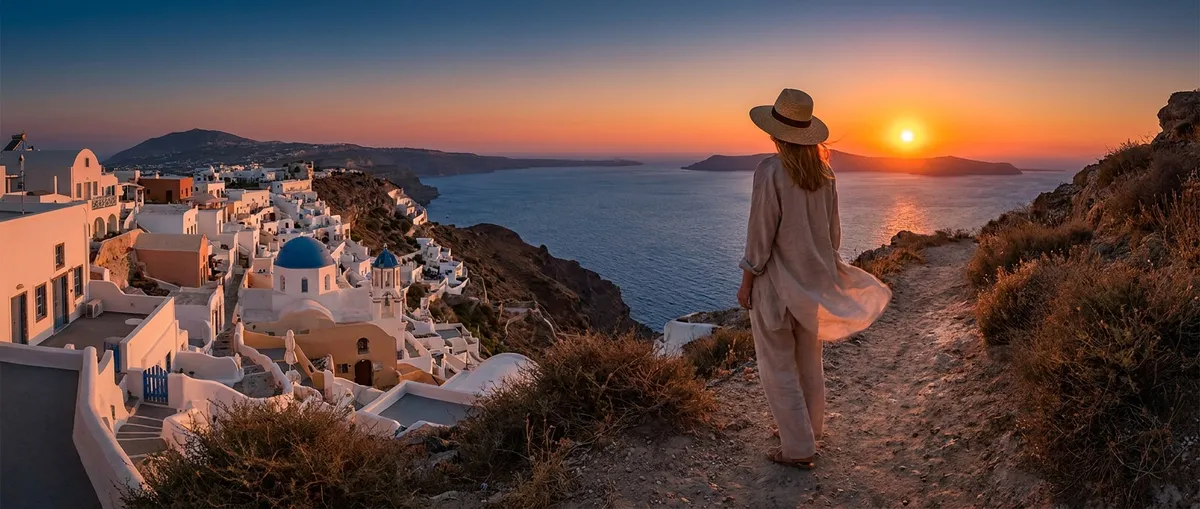
- Santorini, Greece – The caldera villages are famous for sunsets, but sunrise from quieter spots like Pyrgos can be just as stunning, with far fewer people.
- Grand Canyon, USA – Sunrise and sunset change the canyon’s colors from muted browns to glowing reds and purples. Different viewpoints reveal new layers of rock with every shift in light.
- Uluru-Kata Tjuta, Australia – Uluru’s rock face deepens from orange to rich red as the sun drops, a moment that’s both visually spectacular and deeply cultural.
- Banff & Jasper, Canada – Sunrise over turquoise lakes like Moraine Lake or Peyto Lake, when the wind is low and the water becomes a perfect mirror, is pure magic.
- Sahara Desert (Morocco, Tunisia, etc.) – Watching the dunes move through shades of gold and shadow at sunset, then seeing the sky fill with stars, is a next-level experience.
If you’re planning a nature-focused trip, check when the sun rises and sets at your destination during your travel dates—day length and light quality change a lot between seasons.
Magical Water Edges: Beaches, Harbors, and Lakes
Water and golden hour are a dream team. Reflections double the color, and boats, piers, and coastlines turn into silhouettes against glowing skies.
Waterfront destinations that level up at dusk:
- Maldives – Many islands face open ocean sunsets, and overwater villas give you uninterrupted views of the horizon shifting through every shade of orange and pink.
- Lisbon, Portugal – The Tagus River glows at sunset; watch the light bounce off the 25 de Abril Bridge and the Cristo Rei statue from the riverfront.
- Halong Bay, Vietnam – Limestone karsts become dramatic shadow shapes against pastel skies on late-afternoon or overnight cruises.
- Cape Town, South Africa – Camps Bay and Sea Point Promenade offer front-row seats to sunsets with Table Mountain as a dramatic backdrop.
- Queenstown, New Zealand – Lake Wakatipu mirrors cotton-candy clouds at dusk, with mountains framing the whole scene.
When planning waterfront stays, filter for properties with “sea view,” “river view,” or “lakefront” and check photos around sunset—many hotels showcase their best light without even mentioning “golden hour” in the description.
Five Practical Tips for Planning Your Golden Hour Getaway
Whether your destination is a mega-city or a small coastal town, these strategies help you turn “nice views” into unforgettable memories.
1. Plan Your Days Backwards from Sunrise and Sunset
Instead of starting from museum opening times or restaurant bookings, anchor your schedule to golden hour.
- Look up sunrise and sunset times for your dates before you book activities.
- Slot major viewpoints, rooftops, hikes, or waterfront spots into those windows.
- Add flexible, low-commitment activities (cafés, markets, shops) in the midday heat.
This approach keeps your peak energy and best light aligned, rather than wasting golden hour in a taxi or queue.
2. Choose Accommodation with Easy Access to a Viewpoint
Location matters more when your goal is catching specific light.
- Prioritize stays within a 10–20 minute walk of a great viewpoint: waterfronts, hilltop parks, bridges, or city overlooks.
- Check maps and satellite view to verify you’re near open spaces, not just “city center.”
- Look for balconies, rooftop terraces, or large windows in listing photos—these can become your own private golden hour spot if you’re tired or jet-lagged.
You’ll be more likely to step out “just for 20 minutes” when golden hour hits if the best view is nearby.
3. Build in a “Golden Hour Buffer” Around Key Moments
Travel has delays. Buses run late, lines grow, weather turns. Protect your golden hour plans with a buffer.
- Aim to arrive at your chosen spot at least 45–60 minutes before sunset.
- Use the early part of golden hour to scout angles, relax, or enjoy a drink.
- Stay at least 20–30 minutes after the sun dips; the colors often peak after sunset during blue hour.
This cushion gives you time to adapt if crowds are heavy or if you want to move to a quieter corner.
4. Pack a Tiny “Golden Hour Kit” in Your Day Bag
You don’t need pro gear to enjoy or capture great light—but small items can massively improve the experience.
Consider keeping:
- A light layer or scarf (it can get cool quickly after sundown)
- A compact power bank (sunset is often when your phone is almost dead)
- A microfiber cloth (for wiping smudges off camera lenses and sunglasses)
- A collapsible water bottle and a small snack (for long viewpoints or hikes)
- A mini tripod or phone stand if you like stable photos or time-lapses
Being comfortable and prepared makes it easier to stay present in the moment, instead of thinking about how cold, hungry, or battery-anxious you are.
5. Have a “Plan B” for Cloudy or Rainy Evenings
Not every sunset will be epic—and that’s okay. The light can still be interesting, and your trip doesn’t need a perfect sky to be memorable.
- Identify an indoor or semi-indoor alternative with views: rooftop bars with covered areas, cafés with big windows, funiculars, or towers.
- Use overcast evenings for night photography instead—city lights can pop even more without harsh contrasts.
- Turn “missed sunsets” into cultural moments: try a local aperitivo hour, night market, jazz bar, or evening food tour.
Thinking of golden hour as a framework rather than a strict requirement keeps your trip flexible and fun.
Conclusion
Designing your trip around golden hour transforms the way you move through a destination. Instead of racing from sight to sight, you’re tuning in to timing, light, and atmosphere—the invisible details that make a place feel alive.
From city skylines igniting after dark to mountains and coastlines melting into gold, those brief windows at the edge of day can become the strongest memories of your journey. Choose destinations with built-in viewpoints, book stays that keep you close to the action, and use the five tips above to give yourself enough space, time, and comfort to soak it all in.
When you look back at your photos—and your memories—you won’t just remember what you saw. You’ll remember the feeling of being exactly where you wanted to be, at the perfect moment, as the sky put on a show just for you.
Sources
- National Park Service – Enjoying Sunrise and Sunset – Overview of sunrise/sunset viewing in U.S. national parks and safety considerations
- U.S. Naval Observatory – Sun or Moon Rise/Set Table – Official tool for checking precise sunrise and sunset times for destinations worldwide
- Japan National Tourism Organization – Tokyo City Guide – Background on Tokyo neighborhoods and viewpoints mentioned in the article
- National Park Service – Grand Canyon Guide – Detailed visitor information, including viewpoints and visiting tips for sunrise and sunset at Grand Canyon National Park
- Banff & Lake Louise Tourism – Lakes and Mountains – Practical information on viewpoints, lakes, and seasonal conditions in Banff and Lake Louise
Key Takeaway
The most important thing to remember from this article is that this information can change how you think about Destinations.