Packing doesn’t have to be a last‑minute scramble or a game of “will my bag even zip?” With a bit of strategy, your suitcase can become a calm, organized basecamp that makes every step of your trip easier—airport, train, road trip, or weekend away.
This guide focuses on five practical, real‑world packing tips you can put into action right now. Think: fewer “I forgot my charger” moments, less overpacking, and more space for what you actually use.
Start With a Personal Packing Formula, Not a Random Pile
Instead of tossing items in until your bag is full, create a simple formula you can repeat for every trip. This keeps you from overpacking and makes prep insanely fast.
Begin by listing categories, not items: tops, bottoms, underwear, outerwear, footwear, tech, toiletries, documents, and “trip‑specific” gear (like swimwear or hiking gear). From there, assign a standard quantity to each based on trip length. For example: two bottoms, four tops, one outer layer, one pair of walking shoes, one “nicer” outfit—then adjust slightly for weather and activities.
Aim for mix-and-match pieces where almost every top works with every bottom. Neutrals with one or two accent colors make this easier. Once you like your setup, save it as a note on your phone or in a travel app. Next time you travel, you’re not starting from scratch—you’re just tweaking your go‑to formula for the destination.
Pack in “Zones” So You Can Find Anything in Seconds
Digging through your bag for one small item is a fast track to stress. Packing in zones keeps everything findable and prevents your luggage from exploding across the hotel room.
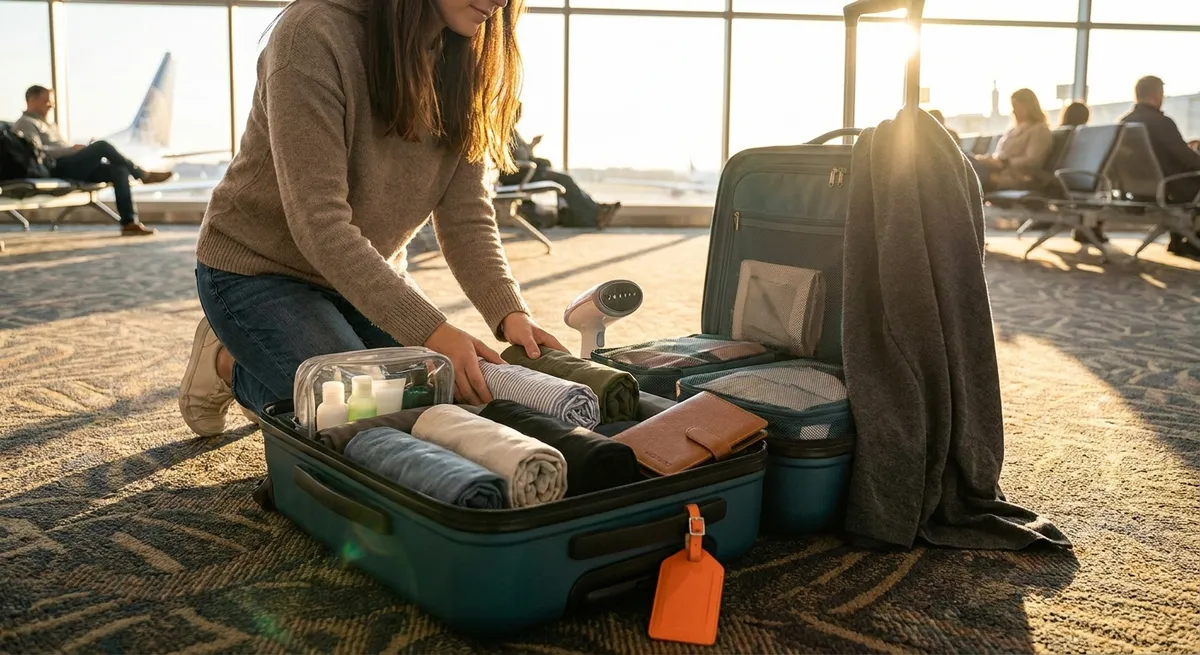
Think in terms of “where” and “how often.” Items you need daily or in transit (passport, headphones, hand sanitizer, meds, charger) belong in your personal item within arm’s reach. Clothes and bulkier items go in your main bag. Within each bag, group similar things into packing cubes or soft pouches: one for tops, one for bottoms, one for underwear/sleepwear, one for tech, one for toiletries.
Use transparent or mesh pouches whenever possible so you can see what’s inside at a glance. For your personal item, create a “seat pocket kit”: a small pouch with your essentials for the flight or train (lip balm, earbuds, pen, wipes, snack). The goal is to avoid rummaging—you should be able to grab what you need in under 10 seconds.
Choose Versatile Clothing Fabrics That Work Harder for You
What your clothes are made of matters as much as how many you pack. Fabrics that stay fresh longer, dry quickly, and resist wrinkles can cut your packing list dramatically.
Look for moisture-wicking, quick-dry materials (often used in athletic or travel wear) that you can wash in a sink and hang overnight. Lightweight merino wool and some performance synthetics are especially good for temperature regulation and odor resistance, meaning you can re-wear them more than once. This is particularly helpful for socks, base layers, and tops.
Avoid heavy cotton pieces that take ages to dry and wrinkle easily, especially if you plan on doing any handwashing. Choose one warm mid‑layer—like a packable fleece or lightweight down jacket—that compresses easily. If you’re heading somewhere with variable weather, layering a few thin pieces is far more flexible (and packable) than lugging a single bulky coat.
Build a Compact “Travel Essentials Kit” You Never Unpack
Instead of rebuilding your toiletry and essentials setup for every trip, assemble a dedicated travel kit that always stays ready in your closet or drawer. This one habit can shave serious time and stress off every departure.
Use travel‑size containers for your regular products and label them clearly. Keep everything in a TSA‑compliant clear bag or a small toiletry organizer. Include basics you often forget: a spare toothbrush, mini toothpaste, travel-size deodorant, small hairbrush or comb, pain reliever, bandages, nail clippers, and any prescriptions (plus a couple days’ extra, just in case).
Do the same for tech: a small pouch with a universal adapter (if you travel internationally), charging cables, a compact power bank, and a backup pair of wired earbuds. After each trip, top up anything that’s running low and put the kit straight back where it lives. When your next trip comes, you’re grabbing a ready-made kit—no repacking, no panic runs to the store.
Weigh and Test Your Bag Before You Leave Home
The best time to find out your bag is too heavy or awkward to carry is in your bedroom, not at the check‑in desk or halfway up a staircase in an old city.
Once you think you’re done packing, do a quick reality check. Use a luggage scale (or a regular bathroom scale) to weigh your bag and compare it to your airline’s carry-on or checked baggage limits. If you’re close to the limit, this is your cue to remove non-essentials—duplicates, “just in case” outfits you’re unlikely to wear, hardcover books you could swap for digital versions.
Then do a mobility test: walk around your home, lift your bag overhead as if placing it in an overhead bin, and carry it up and down stairs if you can. Pay attention to pressure points on your shoulders or hands. If it already feels unwieldy, imagine wrangling it after a delayed flight or long transfer. Lightening your load by even 1–2 kg can make your entire journey feel smoother and more enjoyable.
Conclusion
Packing well isn’t about being minimalist for the sake of it; it’s about making your trip smoother, lighter, and more flexible. A simple packing formula, clear zones inside your bag, smart fabrics, a ready‑to‑go essentials kit, and a quick weight test transform packing from a chore into a reliable pre‑trip ritual.
Each trip will teach you something—what you didn’t use, what you wished you had, and what made your life easier. Take a minute after you get home to note those lessons. Your future self (and future suitcase) will thank you.
Sources
- Transportation Security Administration (TSA) – What Can I Bring? - Official guidance on liquids, electronics, and items allowed in carry-on and checked bags
- U.S. Department of State – Travelers Checklist - Helpful reference for documents and prep steps to consider before packing
- Mayo Clinic – Travel and Medical Kits - Recommendations on medications and health items to include when you travel
- Harvard Health – Smart Packing for Healthy Travel - Guidance on health-focused packing choices and personal care items
- REI Co-op – How to Choose Travel Clothing - Detailed overview of fabrics and features that make clothing more versatile for trips
Key Takeaway
The most important thing to remember from this article is that this information can change how you think about Packing Tips.