Packing doesn’t have to mean chaos, overstuffed bags, and last‑minute stress. With a few smart habits, you can turn packing into a calm, repeatable routine that works for weekend getaways and long-haul adventures alike. These five practical tips are all about making your bag easier to live out of, your travel days smoother, and your trip more enjoyable from the moment you zip up your suitcase.
Build a Reusable Packing Template (So You Never Start from Zero)
Instead of “re‑inventing” your packing list before every trip, create a reusable template you can tweak in minutes.
Start by writing a master list divided into simple categories: Clothing, Toiletries, Tech, Documents, Health & Safety, and “Day-One Essentials.” Under each category, add the items you almost always need, regardless of destination—like underwear, chargers, prescription meds, and ID. Then, create two or three variations (e.g., “Beach,” “City,” “Cold Weather”) with add-ons like swimwear, a packable down jacket, or nicer shoes.
Save your template in a notes app or cloud document so it’s accessible on all your devices. Before each trip, duplicate it, delete what you don’t need, and add destination-specific items like power adapters or hiking gear. As you travel, note what you didn’t use or what you wished you’d packed, and update the master list when you get home. Over time, your template becomes a personalized “auto‑pilot” system, cutting your packing time dramatically and reducing the chance you forget something important.
Pack by “Outfits” and “Activities,” Not Just by Items
Many travelers overpack because they think in terms of individual items (“I might need this shirt”) instead of complete outfits and actual activities. Flip that approach.
Look at your itinerary and list your real days: “Walking all day + casual dinner,” “Beach and pool,” “Hiking + photos,” “Travel day,” “Work meeting,” etc. For each day or activity, choose a base outfit and one backup piece that can swap in if weather or plans change. Prioritize versatile clothing that layers well and can be dressed up or down—like neutral t‑shirts, dark jeans or chinos, a simple dress, and a lightweight sweater or button-up.
Lay the outfits out on your bed and physically pair them with shoes and outerwear. If a piece doesn’t clearly belong to at least two outfits (like a jacket you can wear on the plane and out to dinner), reconsider it. This approach keeps your bag lean while still giving you options, and you’ll spend less time in your hotel room wondering what to wear because each day already “has” an outfit waiting.
Design a “Travel-Only” Toiletry Kit You Never Unpack
Toiletries are where many people waste time before every trip—decanting, hunting for mini bottles, or realizing they forgot something at home. Solve this once by creating a dedicated “travel-only” kit that lives in your bag or a drawer between trips.
Use a clear, zipped pouch or hanging toiletry bag and fill it with travel-size versions of your essentials: toothbrush, toothpaste, deodorant, face wash, moisturizer, razor, contacts or glasses supplies, and any daily medications (always in labeled containers). If you fly often, keep liquids in containers that fit within your airline’s carry-on rules, so you never have to re-pack them in a hurry.
Label or list what lives inside the kit and tape a small “refill checklist” on or in the bag (e.g., “Check: toothpaste, sunscreen, meds, contacts, razor blades”). After each trip, top up anything that’s running low so the kit is always ready. This one-time setup pays off every time you travel—your morning routine feels normal, and you can throw your kit into your suitcase at the last minute with confidence that nothing’s missing.
Make Your Bag Livable: Create Zones, Not Piles
A packed bag should feel like a tiny, organized closet, not a black hole. The goal isn’t just fitting everything in—it’s being able to find it without unpacking your entire life on every hotel floor.
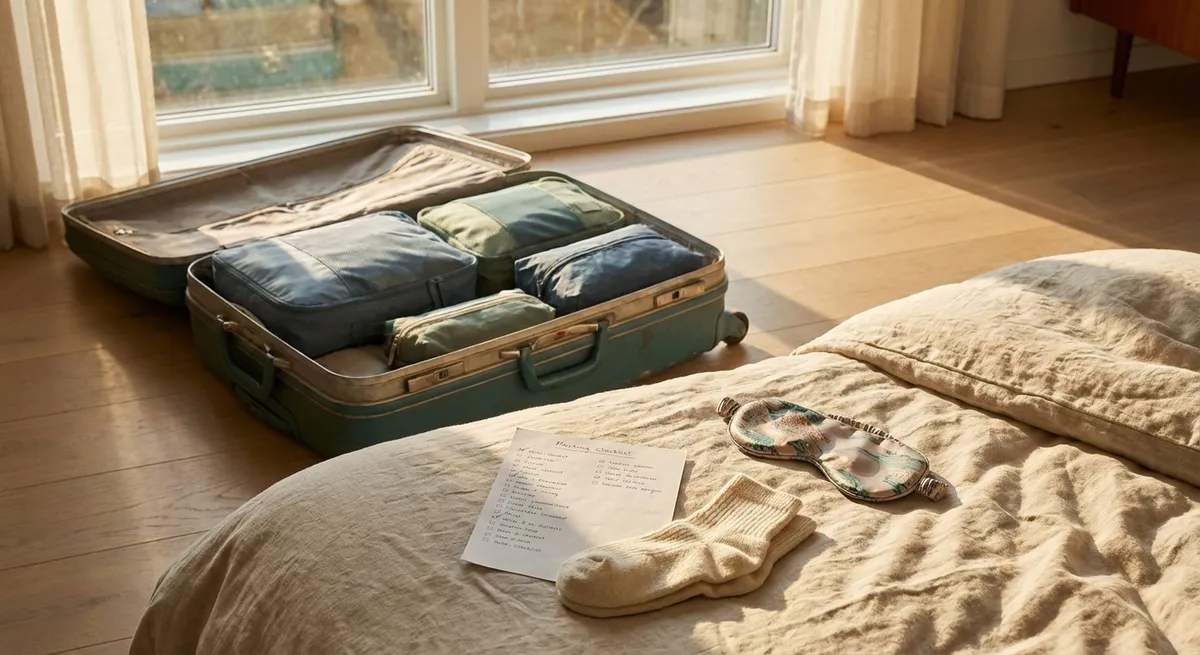
Use simple “zones” inside your suitcase or backpack. Packing cubes or lightweight fabric pouches are great, but even large zip-top bags can work. Group items by how and when you use them: one cube for tops, one for bottoms, one for underwear and sleepwear, another for workout or swim gear. Keep a separate, easy-to-grab pouch for “daily access” items like chargers, headphones, a pen, lip balm, hand sanitizer, and eye mask.
Place your “first-night” items near the top or in an outer pocket—pajamas, a change of underwear, a toothbrush, and any medication—so if you arrive late or exhausted, you don’t have to fully unpack. If you’re on a multi-stop trip, assign a consistent place for your passport and boarding passes (like an inside pocket or a small travel wallet). Treat your bag like a tiny room: when everything has a “home,” you spend less time rummaging and more time enjoying your destination.
Prepare a Tiny “In-Transit Comfort Kit” You Can Grab Instantly
Flights, trains, and long bus rides are much more comfortable when you have a few key items within reach instead of buried in the overhead bin. That’s where an in-transit comfort kit comes in.
Use a small pouch—something you can quickly pull out of your personal item—and stock it with items that make travel days smoother: earphones or noise-cancelling headphones, a slim eye mask, earplugs, a small pack of tissues, hand sanitizer, lip balm, a travel-size moisturizer, a pen for customs forms, and a healthy snack like nuts or a granola bar. If you’re sensitive to cold, add a thin pair of socks and a packable scarf or neck warmer.
Before boarding, move this kit into the seat-back pocket or keep it at your feet so you don’t have to stand up repeatedly to get what you need. This small bit of planning makes a huge difference in how rested and refreshed you feel when you land, and it helps you arrive ready to start exploring instead of needing hours to recover from the journey.
Conclusion
Packing well isn’t about being perfect or owning fancy gear—it’s about building a few smart habits that take the stress out of getting ready. A reusable packing template, outfits matched to real activities, a dedicated toiletry kit, clear “zones” in your bag, and an in-transit comfort pouch all work together to make travel days calmer and your time on the road smoother. The more you repeat these habits, the less mental energy packing will require, and the more space you’ll have—literally and mentally—for the fun parts of travel. Next trip you plan, try adopting even one of these tips and notice how much lighter the whole experience feels.
Sources
- U.S. Transportation Security Administration (TSA) – What Can I Bring? – Official guidelines on what’s allowed in carry-on and checked baggage, including liquids and personal items
- U.S. Department of State – Traveler’s Checklist – Government advice on documents, medications, and preparation before international trips
- Centers for Disease Control and Prevention (CDC) – Travel Packing List – Health-focused packing guidance, including medications, first-aid, and safety items
- Mayo Clinic – Travel Health Tips – Expert recommendations for staying comfortable and healthy in transit and at your destination
- Consumer Reports – How to Pack a Suitcase – Practical advice on organizing luggage and choosing gear efficiently
Key Takeaway
The most important thing to remember from this article is that this information can change how you think about Packing Tips.